Corrosion, Vapour, and Zones — Handled
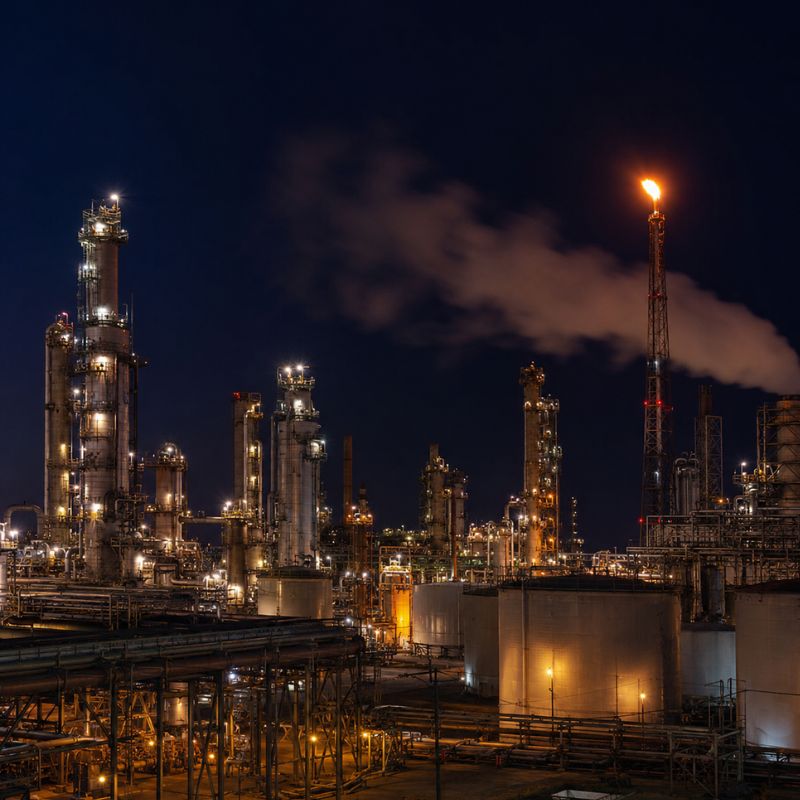
Chemical plants combine flammable vapour, aggressive wash-down and corrosive atmospheres. Our GB 3836 explosion-proof range and IP66 tri-proof fixtures are built to light process units, tank farms and effluent areas safely and for the long term.
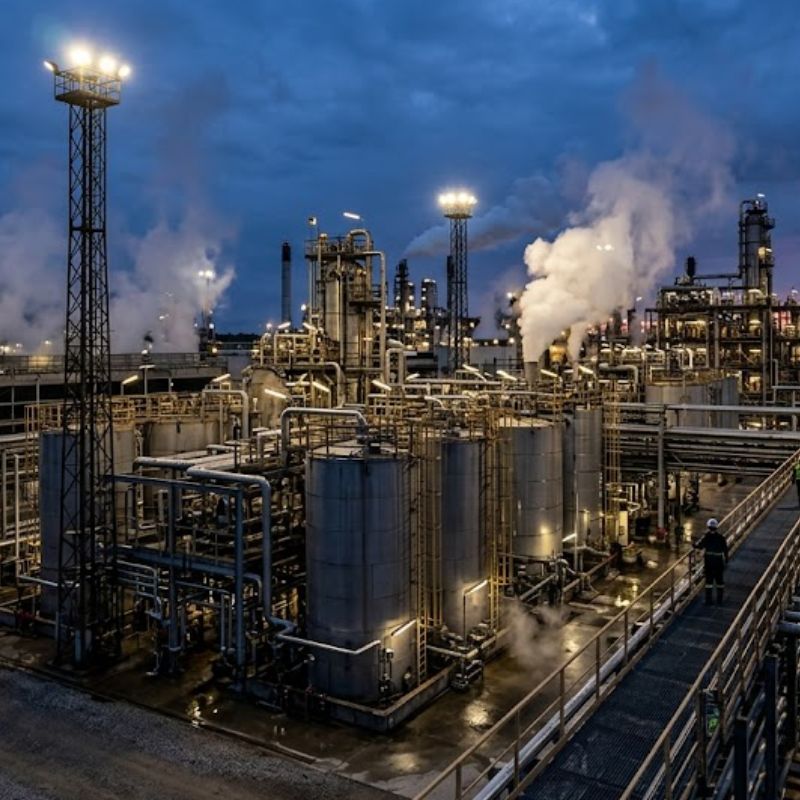
Where Vapour and Corrosion Meet
A chemical plant asks two things of its lighting at once: contain any spark where solvent vapour can form an explosive atmosphere, and resist the corrosive, wash-down environment everywhere else. That calls for certified Ex fixtures in the classified zones and sealed, corrosion-resistant fixtures across the rest of the site.
Process and pump areas with solvent vapour are classified Zone 1 / 2 and need Ex fixtures.
Aggressive atmospheres and wash-down demand corrosion-resistant, sealed bodies.
Continuous-process sites cannot afford lighting that fails between turnarounds.
Vapour, Wash-Down, and Safe Areas
Each part of a chemical site carries its own classification and corrosion demand — here is what we typically specify.
Process Units & Reactors
Flameproof Ex fixtures where solvent vapour can be present.
Explosion-Proof Lights →Tank Farms & Bunds
Long-throw floods at grade for perimeter coverage.
LED Flood Lights →Pump & Pipe Galleries
Sealed, corrosion-resistant fixtures around leak points.
Explosion-Proof Lights →Wash-Down & Effluent
IP66 tri-proof linear that shrugs off chemical wash-down.
LED Tri-Proof Lights →Drum & Warehouse Storage
Sealed high-bay or linear coverage for storage and handling.
LED Tri-Proof Lights →Control Rooms & Labs
Clean, high-CRI linear light for instruments and benches.
LED Tri-Proof Lights →Inside the Plant Fence
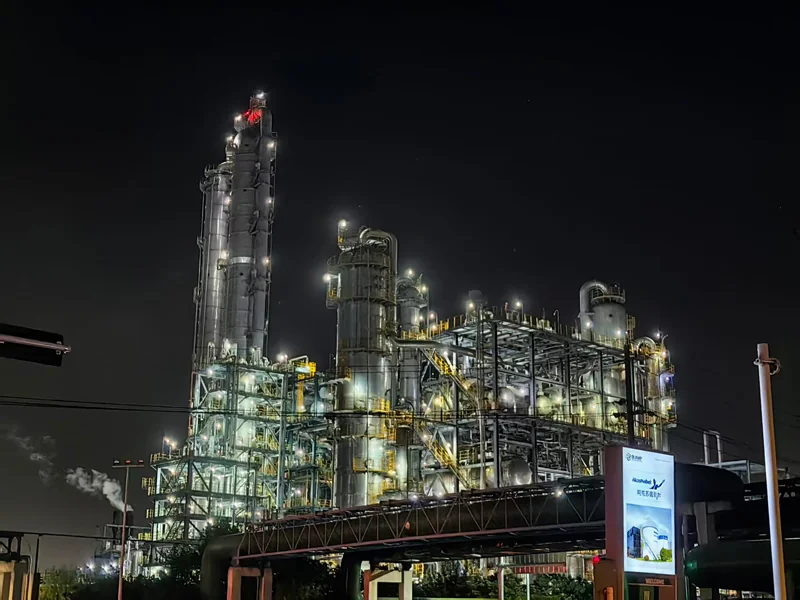
Process Unit & Pump Gallery
Solvent-vapour release points classify large parts of the unit as hazardous, while corrosive air attacks every fitting.
Specify SJFB Ex d / Ex de flameproof luminaires in corrosion-resistant finishes, laid out so operator routes and valves are well lit.
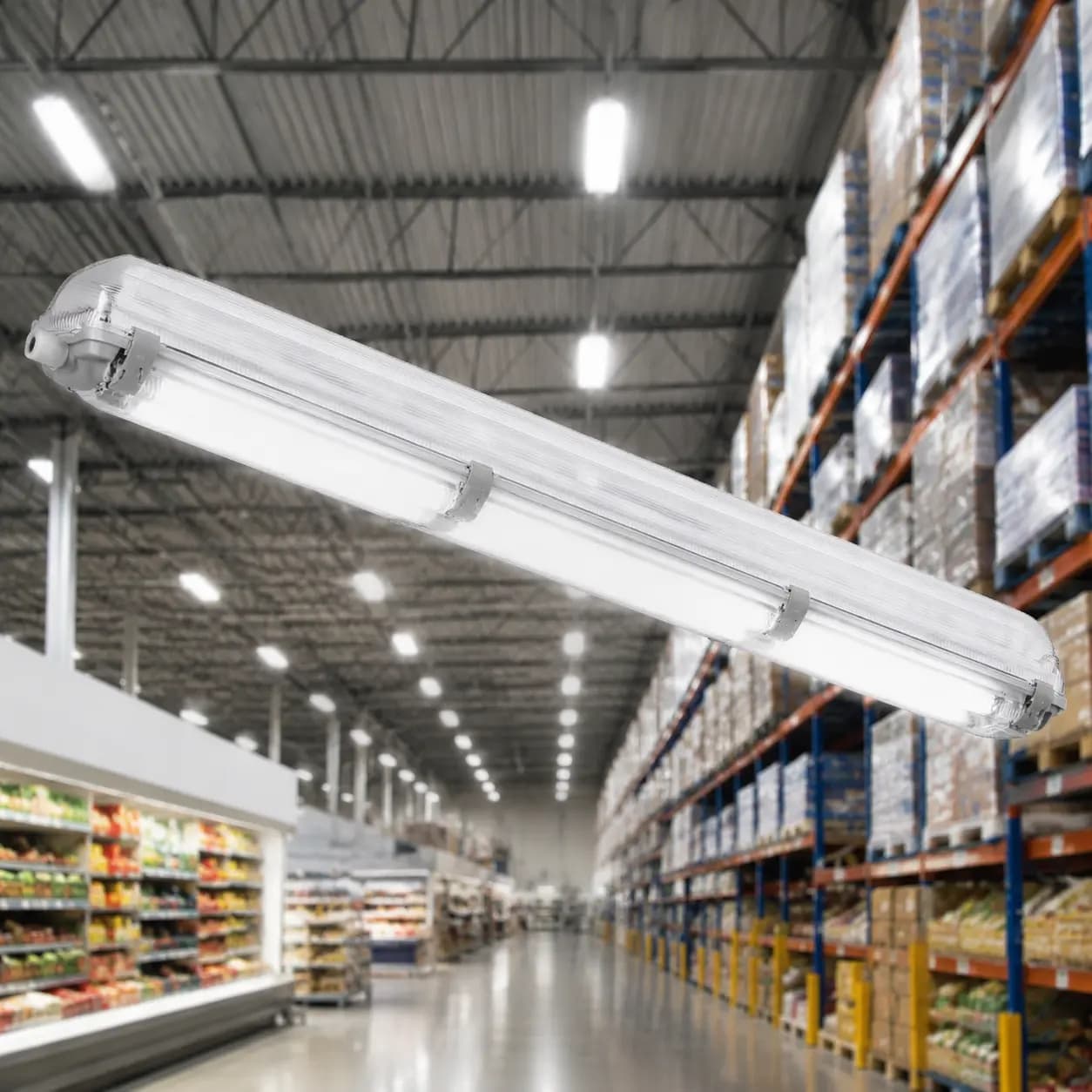
Wash-Down & Effluent Area
Routine chemical wash-down and humidity destroy unsealed fixtures and fog diffusers within months.
Use IP66 tri-proof linear fixtures with chemical-resistant bodies and gaskets that keep moisture out of the optical chamber.
Certified, Sealed, and Documented
GB 3836 Explosion-Proof Range
SJFB Ex d / Ex de fixtures for IIC gas groups and Zone 1 & 2 around reactors, pumps and pipe galleries.
Learn more →Corrosion & Wash-Down Resistance
IP66 sealing and corrosion-resistant finishes for aggressive, frequently-cleaned chemical environments.
Learn more →Hazardous-Area Lighting Design
DIALux studies against your area-classification drawing, with IES/LDT files and fixture schedules.
Compliance Documentation
GB 3836 certificates, type-test reports and CE paperwork supplied for site approval and customs.
Learn more →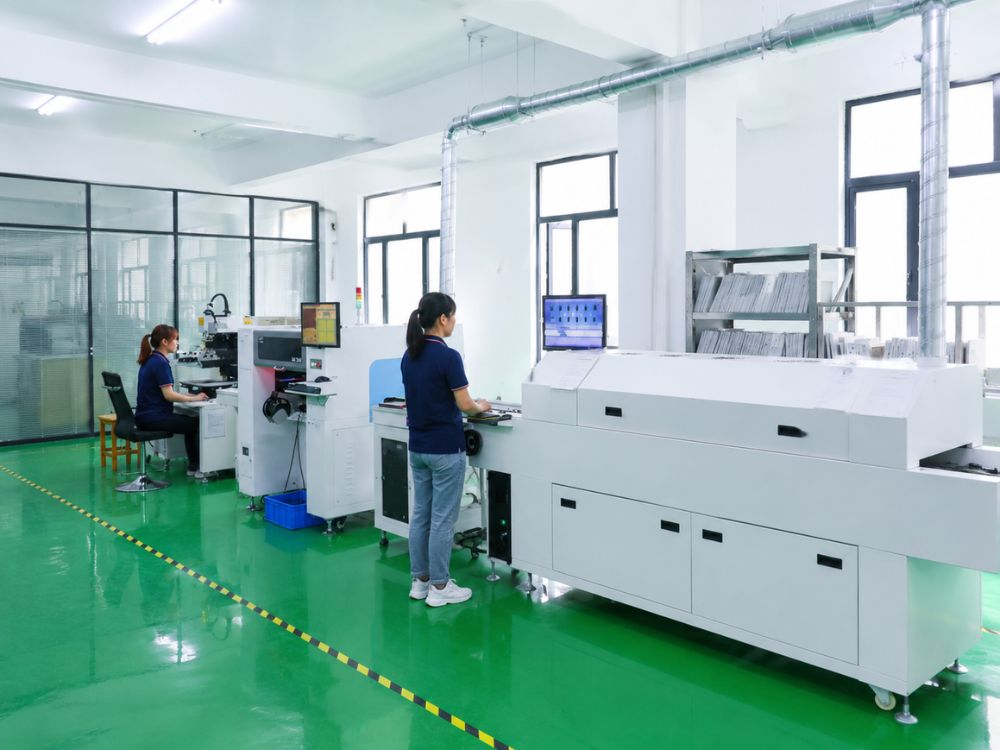
Tested Against the Atmosphere It Lights
Chemical-site fixtures only earn their place by surviving corrosion and wash-down. SJFB explosion-proof bodies are type-tested to GB/T 3836, and our industrial fixtures are salt-spray and IP-tested in-house before they ship — so the rating on the label matches the life on site.
View CertificationsThe Chemical Core Range
Explosion-Proof Lights
Hazardous area lighting · oil & gas · chemical · mining
LED Tri-Proof Lights
Waterproof · vapor-tight · corrosion-resistant linear LED
LED Flood Lights
Stadium flood lights · outdoor flood lighting · industrial yard illumination
Chemical Plants Lighting — Answered
Are your explosion-proof fixtures suitable for chemical process areas?
Yes. The SJFB series is certified to GB/T 3836-2021 (certificate ZJEx25.1185) for Ex d / Ex de protection, IIC gas groups and Zone 1 & 2 — the classifications typical of solvent-vapour process and pump areas. We supply the certificate and type-test report with each project.
How do you protect fixtures against corrosion and chemical wash-down?
Non-hazardous areas use IP66 tri-proof fixtures with corrosion-resistant bodies and gaskets, salt-spray tested before shipment. Explosion-proof bodies are finished for corrosive atmospheres. Tell us the chemicals and cleaning regime and we match the material and finish.
Can you design lighting to our area-classification drawing?
Yes. Share your hazardous-area classification drawing and layout and our engineers return a DIALux study and fixture schedule that places certified fixtures in the classified zones and sealed fixtures elsewhere, with IES/LDT files for verification.
Which markets do you supply for petrochemical projects?
We ship project-direct to the Middle East, Southeast Asia, Latin America and Europe, with GB 3836 certificates, test reports and full customs documentation. Minimum order quantities apply for custom builds.
What is the difference between Ex d and Ex e fixtures?
Ex d (flameproof) contains an internal ignition: the enclosure withstands the explosion and cools escaping gas through machined flame paths, which suits the optical and driver chamber. Ex e (increased safety) prevents ignition by design - no arcing parts, reinforced insulation, secured terminals - which suits wiring compartments. Most modern fixtures combine them as Ex db eb: flameproof where the electronics live, increased-safety where the electrician works.
Which temperature class do solvent areas need?
The fixture's T-class (its maximum surface temperature) must sit below the auto-ignition temperature of the solvents present: T3 (200 degC) covers many fuels and solvents, while T4 (135 degC) covers the large majority of industrial atmospheres including harder cases like certain ethers. Your site's gas study lists the governing substance - match the class to that, since specifying a colder class than needed adds cost without adding safety.
Related Hazardous Sectors
Tell us about your project.
Get a quote within 24 hours.
Share your application — environment, requirements, quantity. A real engineer responds with a tailored quote, IES files, and timeline within one business day.