100W LED Flood Light
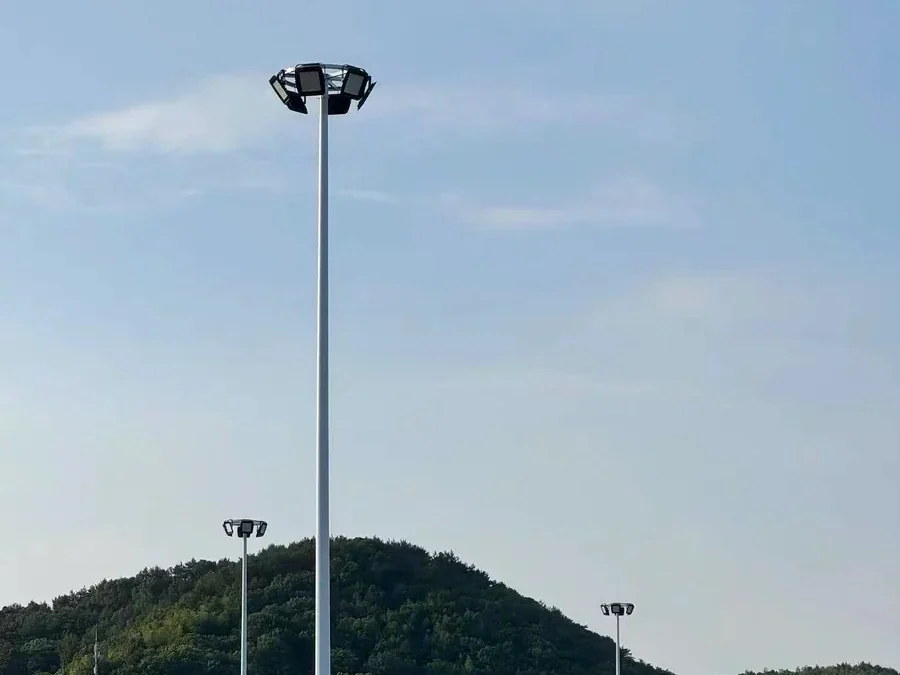
The 100W LED flood light is the most-bought wattage in outdoor area lighting, and for a straightforward reason: it is the point where one fixture covers a real working area while still mounting on a wall bracket, an existing pole or a low mast without structural work. Yards, car parks, loading bays, building faces and small courts all sit in its envelope.
It is also the wattage where specification discipline pays most, because volume attracts the widest quality spread. Nine SJTG housings carry a 100W variant - from the compact SJTG605 at 58 mm deep to the modular SJTG611 flagship platform - and all of them ship with the photometric files needed to prove the layout before the order.
Every Measured Unit, Published
All units tested on a calibrated HPG1800 goniophotometer. We publish the strong results and the modest ones — the economy build reads lower than the flagship, and both numbers are real.
Where 100W Fits
Selection guidance by mounting height and duty - confirmed with a free DIALux study for your site.
4-10 m is the 100W envelope: wall brackets, building corners, car park poles and low masts. Below 4 m the beam is usually too concentrated; above 10 m step to 200W.
From 8 m with a medium beam, one unit covers a working bay or a parking row. Fixture count and aiming come from the layout, not from a lumen-per-square-metre rule.
Yards, compounds, car parks, loading docks, building facades, signage, perimeter security, small courts in multiples.
For a full pitch or a mast ring, move to 200-400W. For a doorway, sign or short pathway, 50W is the economical choice.
SJTG Housings Available at 100W
| Series | Design Highlight | Dimensions (L×W×H) | |
|---|---|---|---|
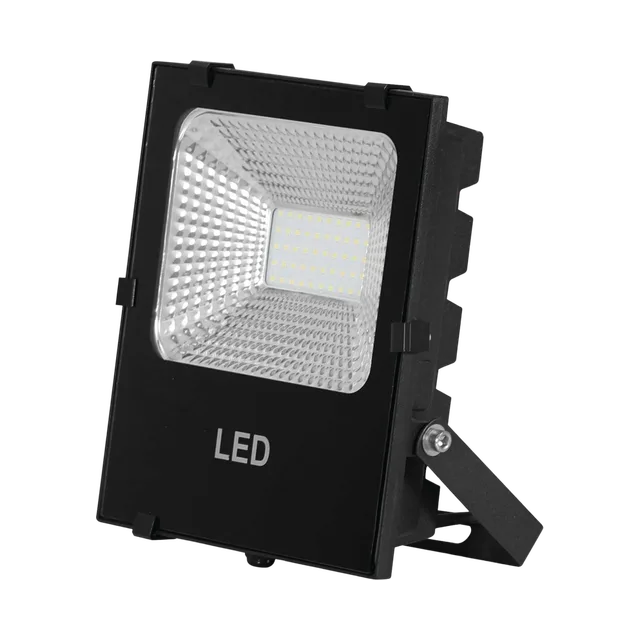 | SJTG601 | High-purity aluminum reflector, uniform output | 290 × 90 × 255 |
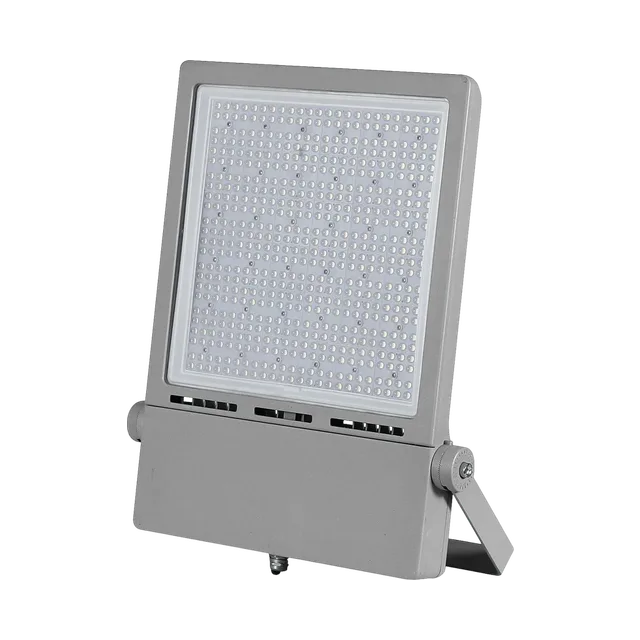 | SJTG602 | Separated cavity - driver heat isolated from LED | 437 × 92 × 344 |
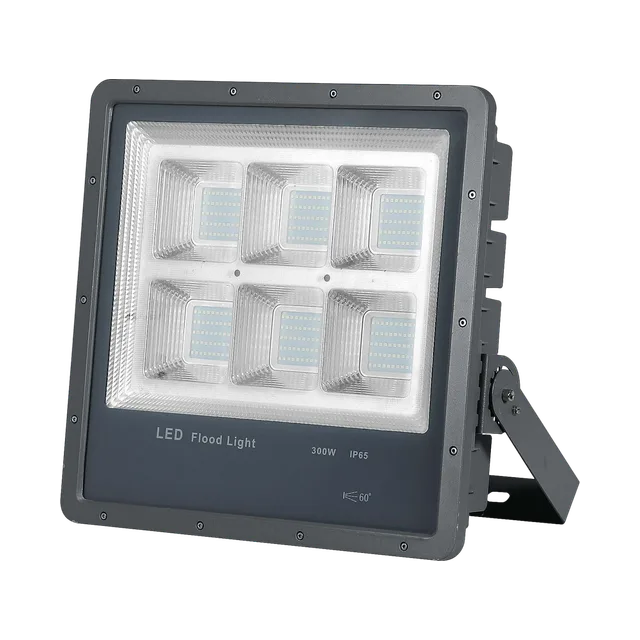 | SJTG603 | Toughened glass front, impact-resistant body | 285 × 110 × 353 |
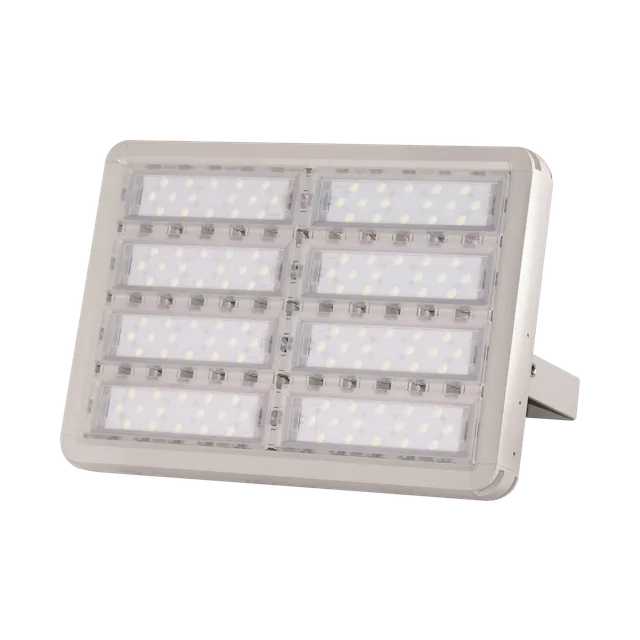 | SJTG604 | High-purity reflector, uniform high-lumen output | 362 × 136 × 417 |
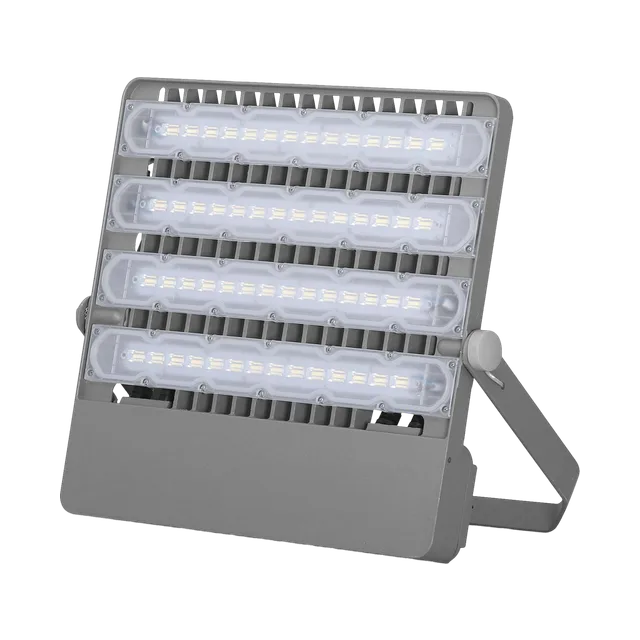 | SJTG605 | Compact all-aluminum modular design | 458 × 58 × 188 |
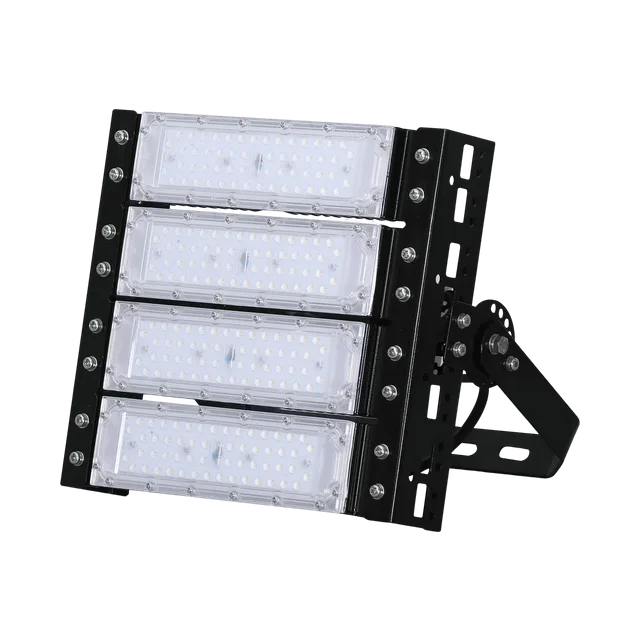 | SJTG606 | Multi-module design, extends to 480W | 320 × 110 × 335 |
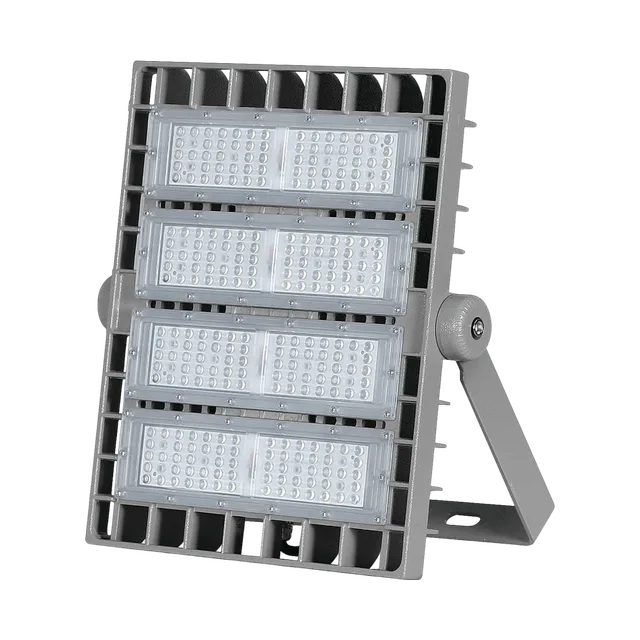 | SJTG608 | Toughened glass + die-cast body, industrial grade | 430 × 85 × 290 |
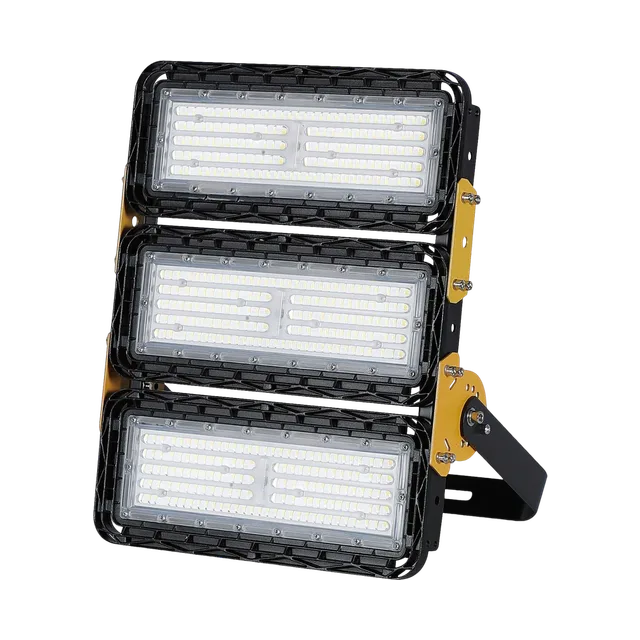 | SJTG609 | Industrial grade - factories, facades, sculptures | 275 × 402 × 320 |
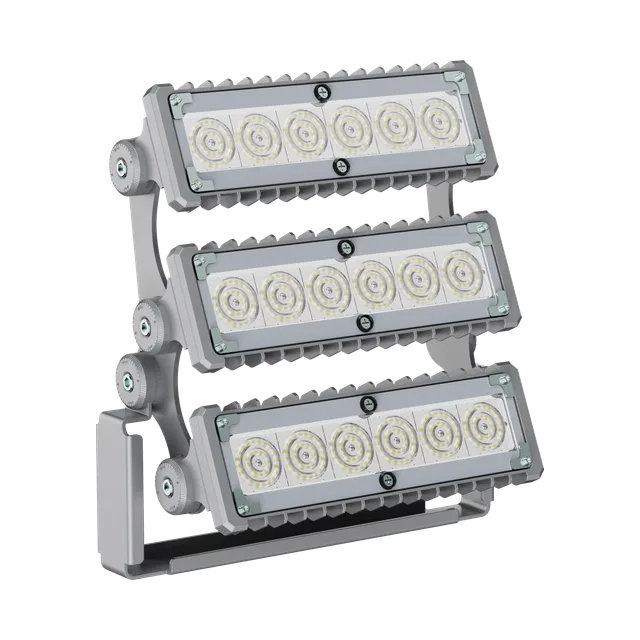 | SJTG611 | Modular flagship - individually aimable units | 419 × 246 × 116 |
Dimensions in mm from the factory catalog. All housings: die-cast aluminum, IP65. Full datasheet and IES/LDT files on request.
Where This Class Works
Three duties this wattage is specified for most often — and what changes in the specification for each.
Yards, compounds and loading areas
The 100W class is the volume wattage of industrial site lighting: enough output to cover a working bay or a yard corner from 6-8 m, small enough that wall brackets and existing poles carry it without structural work. Most sites buy more 100W fixtures than any other rating for exactly that reason.
- Mounts on walls, poles and existing brackets
- Covers a working bay from 6-8 m
- IP65 sealed for permanent outdoor duty
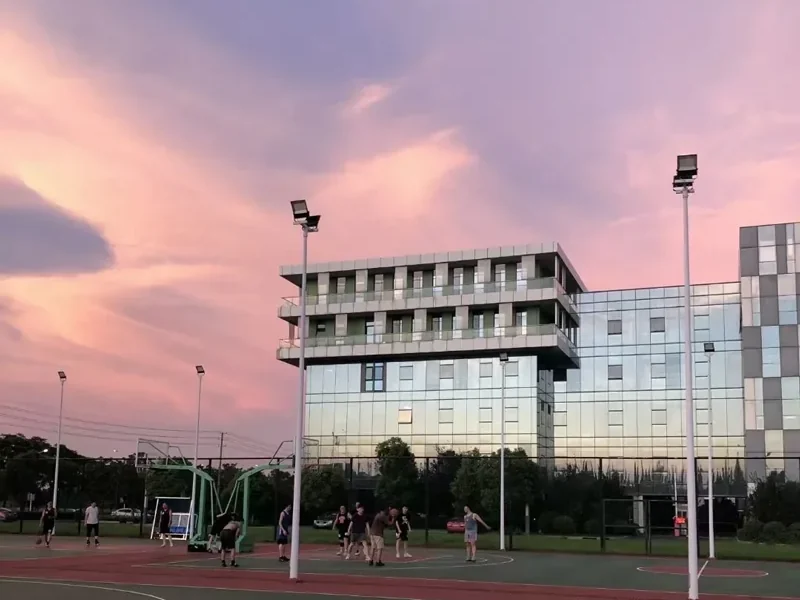
Car parks, perimeters and security lighting
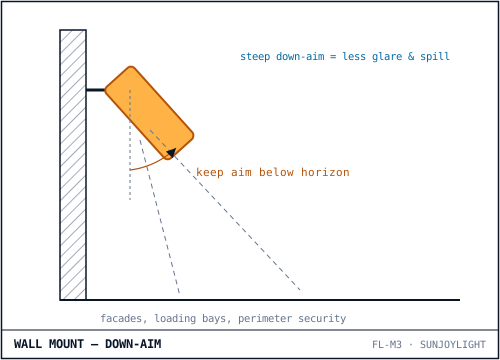
Boundary and car park lighting has to land on your surface and stop there. A steep down-aim from 6-10 m keeps the light on the asset and off the neighbours - which is what prevents the complaints and the re-aiming visit that follows them.
- Steep down-aim controls spill
- Photocell and dimming configurable at order
- Corrosion-resistant finish for coastal sites
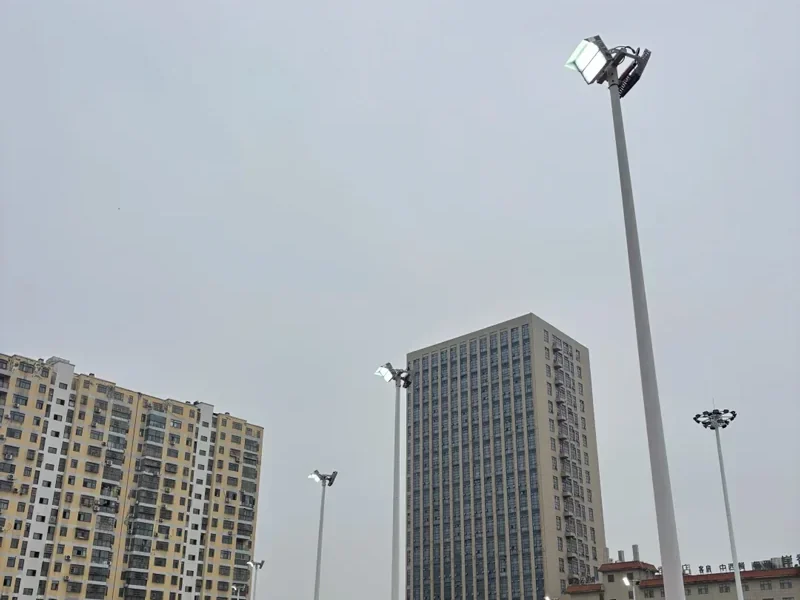
Small courts, facades and signage
Below the stadium classes sit the jobs that need several modest fixtures rather than a few large ones: a five-a-side court, a building face, a sign gantry. Multiple 100W units give finer aiming control and a lower pole load than fewer high-power heads.
- Finer aiming control in multiples
- Lower pole and bracket loading
- Beam options from narrow to wide
How It Goes Up
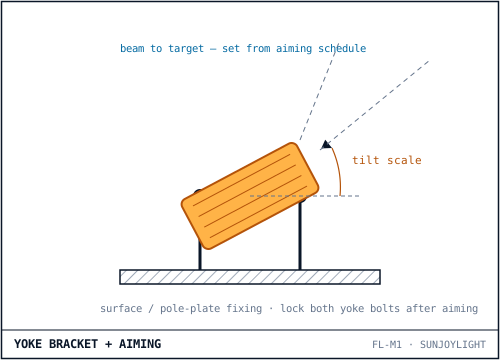
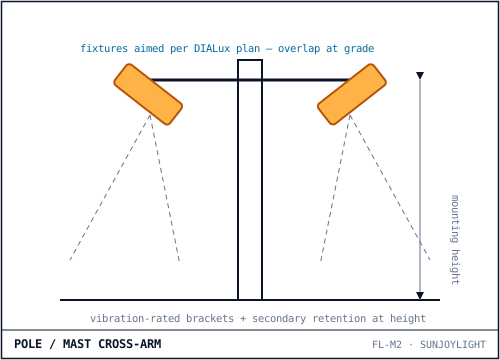
The mounting methods this fixture class is supplied for. Installation photographs from delivered projects are being catalogued and will be added alongside.
Every Order Ships With the Paperwork
The documents an engineer needs to verify the design and an importer needs to clear customs — supplied as standard, not on request.
IES / LDT files for the exact housing and optic quoted, so your designer models the fixture you are buying.
A free DIALux study from your dimensions — lux, uniformity and fixture count verified before you commit.
CE / FCC / CCC documentation with the type-test reports behind it, plus the Ex certificate where applicable.
Driver spares quoted with the order and an engineer contact who answers after the invoice is paid.
Straight Answers to the Questions Buyers Ask in Forums
What buyers report in sourcing forums and marketplace reviews — and how to check any supplier, including us.
This is the highest-volume wattage online, so it attracts the most inflated listings - 100W units claiming outputs that would need far more power. We publish goniophotometer reports for our 150W, 200W and 300W units below; ask any supplier for the equivalent document rather than accepting the listing figure.
The 100W point exists across nine SJTG bodies because the duty varies: separated driver cavities for hot climates, toughened glass for impact, compact bodies for tight brackets. Tell us the mounting position and environment and the housing choice narrows to one or two.
100W of quality LED is the working replacement for a 250W metal halide flood, and often for a 400W unit once optics and lumen depreciation are accounted for. Validate with the IES file at your geometry - equivalence tables size replacements, not designs.
Two failure points dominate the complaint threads: water past the gasket or cable gland, and a driver with no surge headroom. Ask where the cable enters, how the seal was tested, and what surge rating the driver carries. Those three answers predict service life better than the lumen number.
100W LED Flood Light — Answered
What does a 100W LED flood light replace?
Typically a 250W metal halide flood, and in many layouts a 400W unit once directional optics and lumen maintenance are accounted for. The gain comes from putting light on the target instead of scattering it. Validate the swap with the IES file at your mounting geometry rather than relying on an equivalence table, which sizes replacements rather than designs.
What area does a 100W flood light cover?
From 8 m mounting with a medium beam, one unit covers a working bay or a parking row at useful levels. The exact figure depends on the beam angle, the mounting height and the level you need to hold, which is why we return a free DIALux layout with fixture count and aiming from your dimensions.
Which 100W housing should I choose?
It follows the duty. SJTG602 separates the driver cavity from the LED for hot climates; SJTG603 and SJTG608 use toughened glass for impact-exposed positions; SJTG605 is the compact body for tight brackets; SJTG611 is the modular platform for projects that may scale. All nine carry the same certification set - share the mounting position and environment and we narrow it to one or two.
Do you publish measured photometric data?
Yes. Our 150W, 200W and 300W units have been tested on a calibrated goniophotometer and the full reports are downloadable on this page. The same test discipline applies across the SJTG range; ask for the specific report for the model and wattage you are quoting and we will send it with the quotation.
Send Us the Space, Not Just the Wattage
Share the dimensions, mounting height and the level you need to hold. Our engineers return a lighting layout with fixture count, aiming and the photometric files behind it — before you commit to anything.
Floor plan or site dimensions, mounting height, target lux or the standard you must meet.
A DIALux study with fixture count, layout, aiming and IES files — at no cost.
Your engineer checks the numbers against the standard. Only then does a quotation matter.
Manufacturing in Changzhou since 1999 · Shipping to 50+ countries · CE / FCC / CCC
Tell us about your project.
Get a quote within 24 hours.
Share your application — environment, requirements, quantity. A real engineer responds with a tailored quote, IES files, and timeline within one business day.