All-in-One Solar Street Light
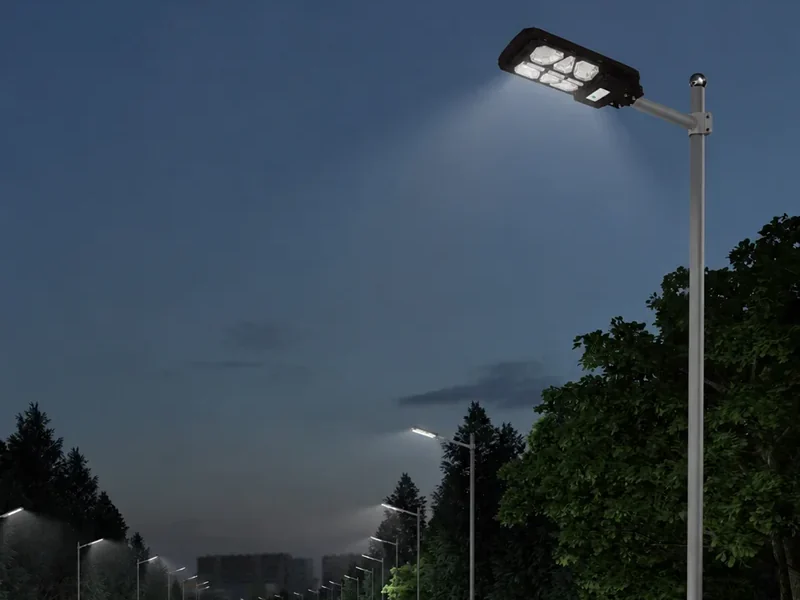
An all-in-one solar street light integrates the solar panel, battery, controller and LED into a single sealed unit that bolts to a pole and starts working the same day — no trenching, no cabling, no metered supply, no electrician. For rural roads, new developments, campuses and perimeters far from the grid, it converts a civil-works project into a mounting job.
Six SJLD-S models cover the range: lightweight ABS bodies for residential streets and paths, die-cast aluminum for municipal and hot-climate duty, and the high-power SJLD115S reaching 800W-class output for wide roads. Typical configurations run 12 hours per charge — and the honest part of the specification is that panel and battery are sized to your site's worst-month sun-hours, not to a universal brochure number.
Choosing an All-in-One Model
Body material and wattage follow the road and the climate — sizing follows the sun. We configure per project.
SJLD111S/112S in ABS: light, economical, quick to mount on 4–8 m poles for lanes, paths and parking.
SJLD113S/114S in die-cast aluminum: the thermal mass and corrosion resistance for city roads and coastal or desert sites.
SJLD115S: the high-power class (300–800W) for dual carriageways and interchange-scale positions where most solar fixtures fall short.
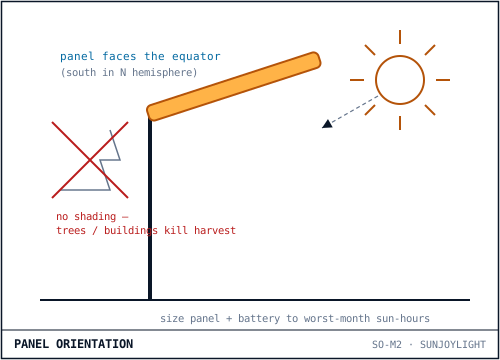
Panel watts × your worst-month peak sun hours must exceed the LED's nightly consumption. Motion-sensor dimming profiles stretch autonomy through cloudy spells.
SJLD-S All-in-One Models
| Model | Power Options | Typical Run-Time | Body Material | |
|---|---|---|---|---|
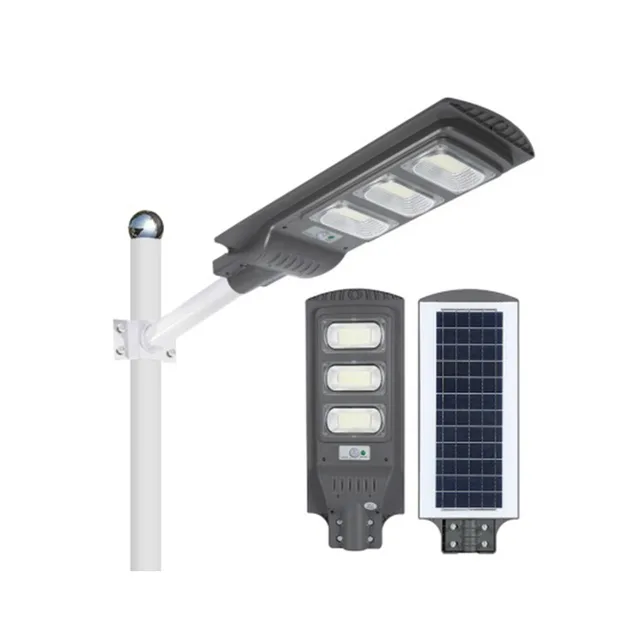 | SJLD111S | 30 / 60 / 90 / 120 / 150W | 12 hours | ABS + Polysilicon |
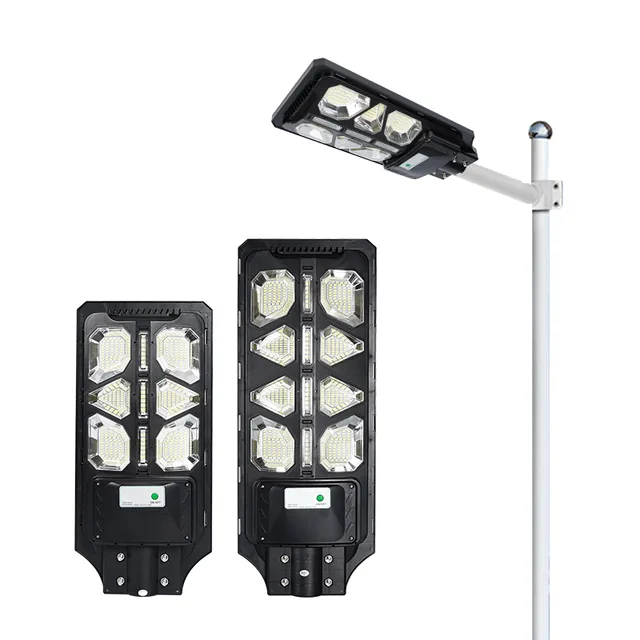 | SJLD112S | 120 / 150 / 200W | 12 hours | ABS + Polysilicon |
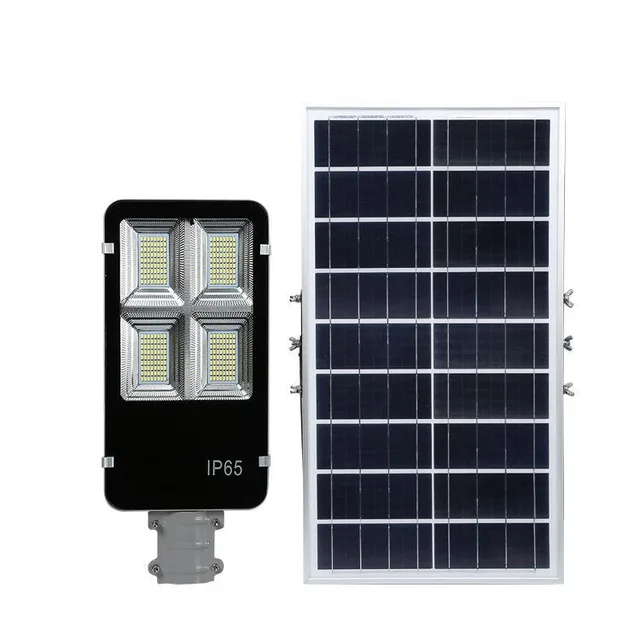 | SJLD113S | 50 – 300W | 12 hours | Die-cast Aluminum + Polysilicon |
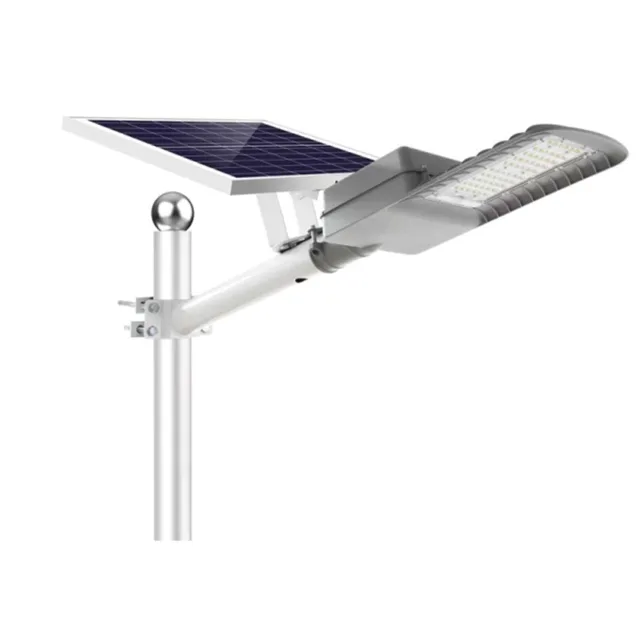 | SJLD114S | 60 – 300W | 12 hours | Die-cast Aluminum + Polysilicon |
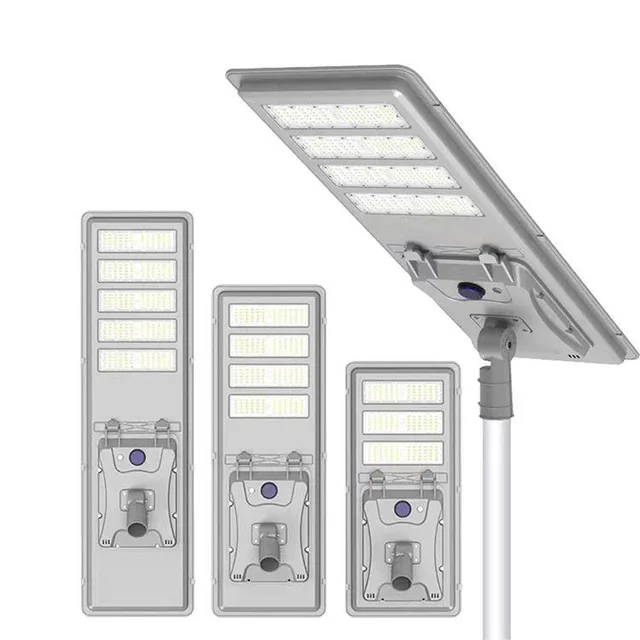 | SJLD115S | 300 – 800W | 12 hours | Aluminum + Polysilicon |
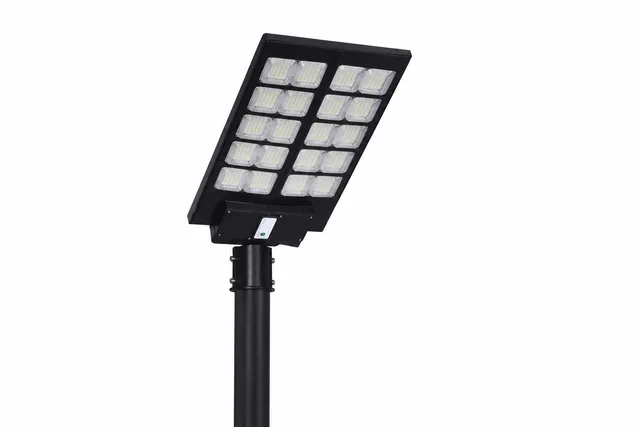 | SJLD119S | 100 / 200 / 300 / 360W | 12 hours | ABS + Polysilicon |
Data from the factory catalog. Run-times are typical configurations — final panel/battery sizing is engineered to your site's sun-hours. Full datasheet on request.
Where This Class Works
Three duties this wattage is specified for most often — and what changes in the specification for each.
Rural roads and unlit routes
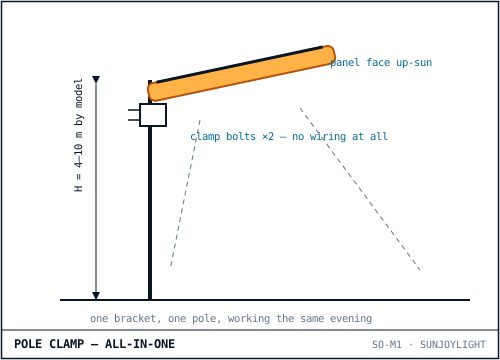
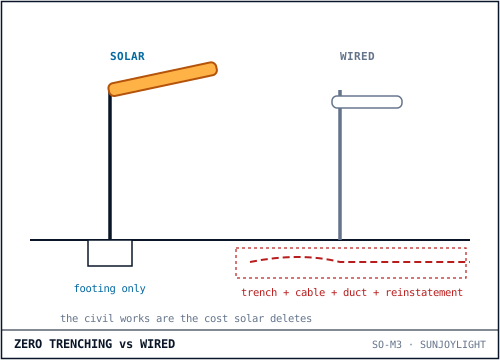
Where the grid is far away, the civil works cost more than the light. An all-in-one unit bolts to a pole and works the same evening — no trench, no cable, no meter, no electrician — which is what turns an unaffordable scheme into a delivered one.
- No trenching, cabling or metered supply
- Typical 12-hour run-time configuration
- Sized to your worst-month sun-hours
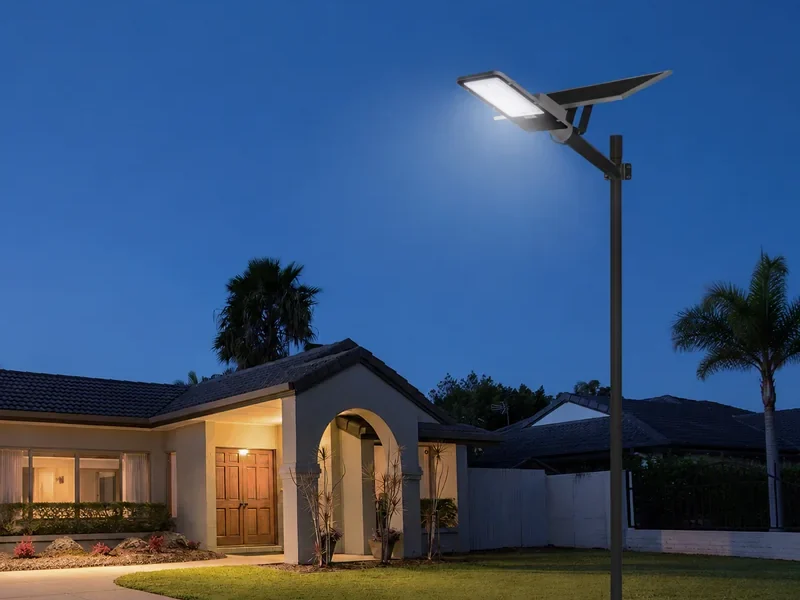
Farm roads, yards and access drives
Private roads and farm yards rarely justify a grid extension. Motion-boost profiles suit them well: the light idles at a low level and rises to full output when a vehicle or person approaches, which stretches autonomy through cloudy spells.
- PIR motion boost extends autonomy
- LiFePO4 battery for daily deep cycling
- ABS or die-cast aluminum body options
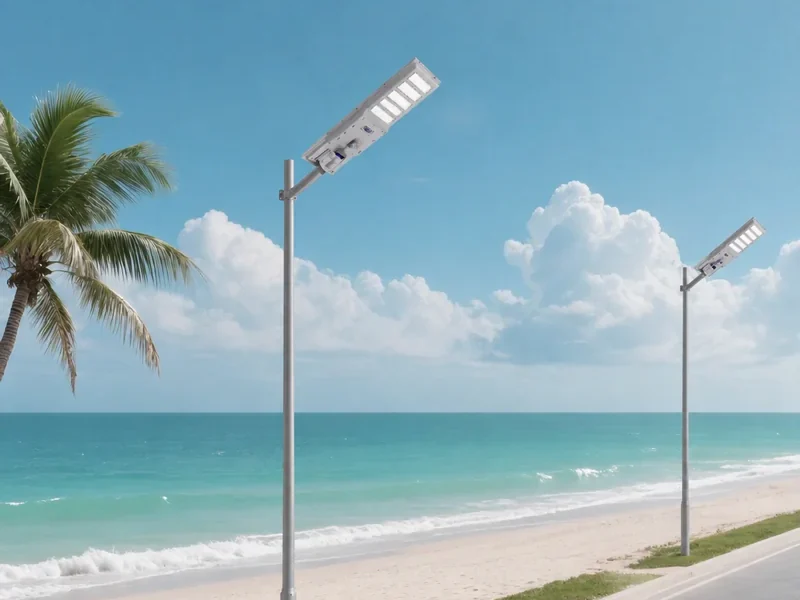
Campuses, perimeters and coastal roads
Coastal and campus installations add corrosion and aesthetics to the brief. Die-cast aluminum bodies handle salt air better than plastic housings, and one fixture family keeps the streetscape consistent across a whole site.
- Die-cast aluminum for coastal duty
- One family across 30–800W
- Panel and battery engineered per project
How It Goes Up
The mounting methods this fixture class is supplied for. Installation photographs from delivered projects are being catalogued and will be added alongside.
Every Order Ships With the Paperwork
The documents an engineer needs to verify the design and an importer needs to clear customs — supplied as standard, not on request.
IES / LDT files for the exact housing and optic quoted, so your designer models the fixture you are buying.
A free DIALux study from your dimensions — lux, uniformity and fixture count verified before you commit.
CE / FCC / CCC documentation with the type-test reports behind it, plus the Ex certificate where applicable.
Driver spares quoted with the order and an engineer contact who answers after the invoice is paid.
Straight Answers to the Questions Buyers Ask in Forums
What buyers report in sourcing forums and marketplace reviews — and how to check any supplier, including us.
Buyer forums document “800W” solar lights whose panels could never charge such a load — one investigated unit claimed 180W and measured 50W. The arithmetic defends you: panel watts × your worst-month sun-hours must exceed the LED's nightly consumption. We quote panel watts, battery watt-hours and the dimming profile so you can run that check on our numbers.
Chemistry and cycle life decide whether the light survives year three. LiFePO4 handles the nightly full cycle of solar duty for thousands of cycles; vague “lithium” often means ternary cells that fade in eighteen months. Ask for chemistry, rated Wh and cycle life at stated depth-of-discharge — all three are on our datasheets.
The forum pattern: fixture fine, junction box flooded. An all-in-one design removes most of those entry points — panel, battery, controller and LED share one sealed body with no site wiring at all, which is half the reliability argument for the format.
The same light performs differently in Lagos, Riyadh and Hamburg. Sizing to the worst month — not the brochure's sunny day — is what keeps the light on in January; we configure panel and battery per project and say so, because the alternative is a dark pole and a warranty argument.
All-in-One Solar Street Light — Answered
How long does an all-in-one solar street light run per charge?
Our typical configurations run about 12 hours — a full night — with the battery sized for cloudy-day autonomy on top. The honest caveat: run-time depends on your site's sun-hours and the dimming profile, which is why we size panel and battery per project rather than quoting one universal number.
All-in-one or split solar street light — which is better?
All-in-one wins on installation speed and cost: one unit, one bracket, no wiring. Split systems win where the panel needs its own orientation (shaded poles, high latitudes) or very large battery capacity. For most roads within reasonable latitudes, all-in-one is the economical default — our solar sizing guide covers the trade-off.
What battery do these lights use?
LiFePO4 (lithium iron phosphate) — the chemistry suited to daily full-cycle solar duty, with thousands of cycles, wide temperature tolerance and stable, safe behaviour in a sealed roadside fixture.
Do they work in cloudy or winter conditions?
Yes, when sized for it. The design rule is worst-month sun-hours, not annual average: we configure panel wattage, battery capacity and the dimming profile to your latitude and climate, and motion-boost profiles stretch autonomy dramatically on low-traffic roads. Share the install location and we run the sizing.
Send Us the Space, Not Just the Wattage
Share the dimensions, mounting height and the level you need to hold. Our engineers return a lighting layout with fixture count, aiming and the photometric files behind it — before you commit to anything.
Floor plan or site dimensions, mounting height, target lux or the standard you must meet.
A DIALux study with fixture count, layout, aiming and IES files — at no cost.
Your engineer checks the numbers against the standard. Only then does a quotation matter.
Manufacturing in Changzhou since 1999 · Shipping to 50+ countries · CE / FCC / CCC
Tell us about your project.
Get a quote within 24 hours.
Share your application — environment, requirements, quantity. A real engineer responds with a tailored quote, IES files, and timeline within one business day.