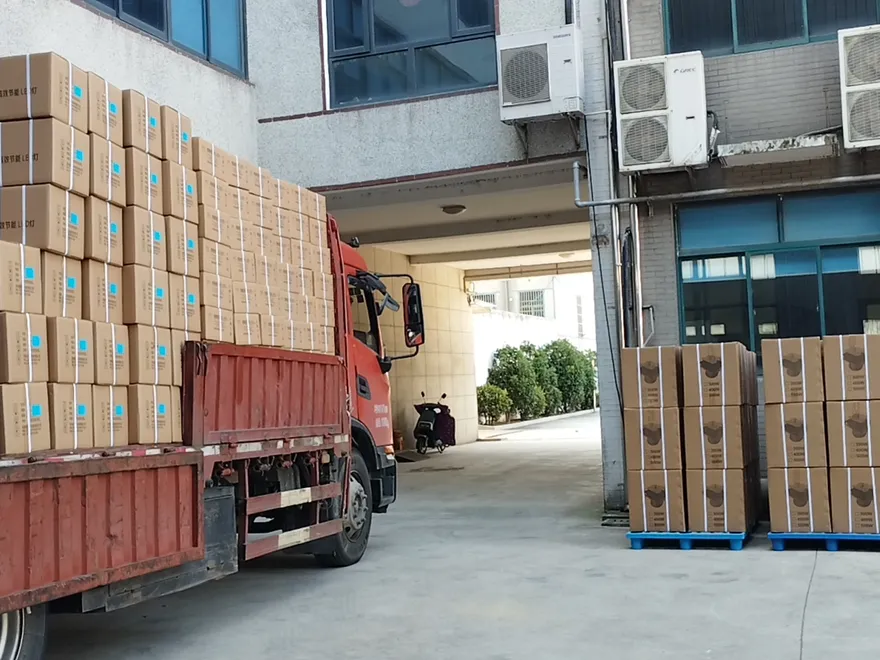
Importing LED lights from China follows a repeatable sequence: define the specification, verify the manufacturer, validate samples against test reports, agree terms and inspection criteria before paying, and let documents — not promises — carry the risk. Done in that order, a first import runs about 11–15 weeks from specification to goods received by sea freight. Done out of order, each skipped step reappears later as a delay, a customs hold, or a warranty dispute. This playbook walks through the entire sequence, in the order the money moves.
Key Takeaways
- The single highest-leverage step is supplier verification — confirming you are dealing with a factory, not a trading company reselling someone else’s production.
- Certification is destination-driven: CE for the EU, FCC for the US, and the importer (you) legally carries compliance responsibility in most markets.
- Never wire a balance payment before a pre-shipment inspection you or a third party controls.
- LED luminaires ship under HS heading 9405; duty and any additional tariffs depend on your destination — confirm subheadings with your customs broker before ordering.
- A realistic sea-freight timeline is 11–15 weeks end-to-end; air freight compresses transit but rarely the production weeks.
The Import Timeline at a Glance
The rest of this guide takes each step in depth.
Step 1 — Define the Specification Before You Contact Anyone
Every bad import starts with a vague inquiry (“price for 200W flood light?”), because a vague inquiry invites every supplier to quote their cheapest interpretation. Write one page before you shortlist anyone: fixture type and quantity, wattage and delivered lumens, target lux level and mounting height if it is a project, operating voltage for your grid, IP rating for the environment, CCT and CRI, certifications your market requires, warranty expectation, and packaging requirements. Quotes returned against the same page are comparable; quotes returned against a one-line inquiry are not.
Step 2 — Verify the Supplier: Factory or Trading Company?
This is the step that decides most import outcomes. A manufacturer controls quality at the source and answers technical questions from its own engineering; a trading company marks up someone else’s production and can only inspect finished boxes. Neither is illegitimate — but you should know which one you are paying, and a trader quoting factory-direct prices is a warning sign in itself.
Practical checks that take one afternoon:
- Business licence. Ask for it. The registered scope tells you whether the company is licensed for manufacturing (生产/制造) or only for trade (贸易/进出口).
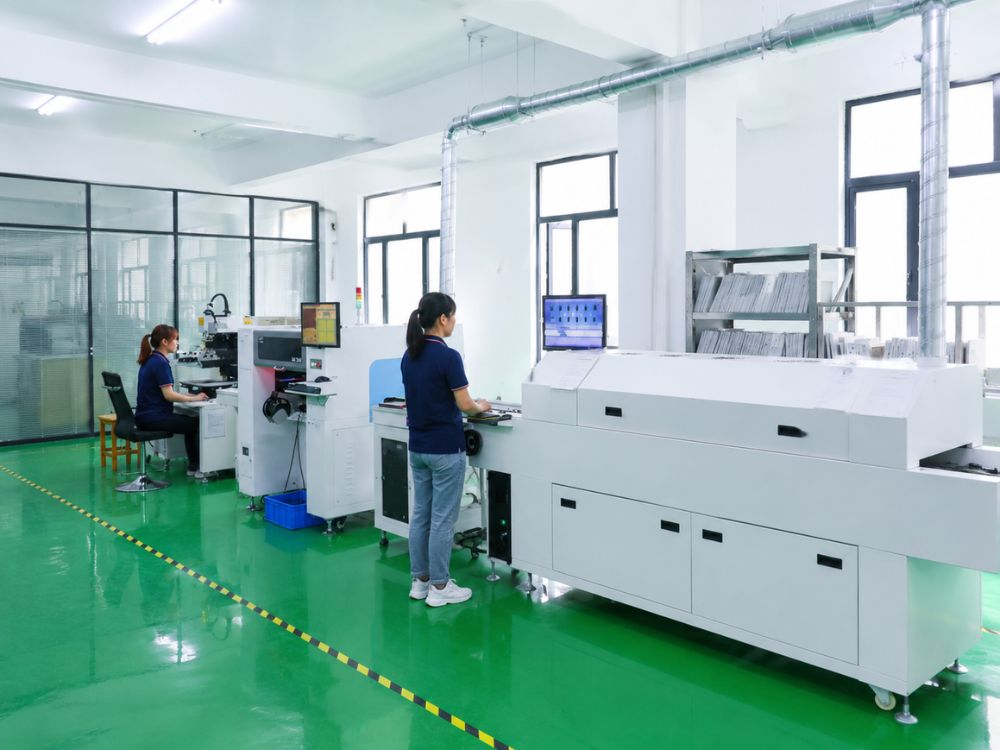
- Live video walk of the line. Not a showroom tour — the production floor, with your product family visible in process. Our own eight-stage manufacturing walkthrough shows exactly what you should expect to see: SMT, die-casting, assembly, aging racks.
- Stage-level evidence on demand. Ask for a solder-paste inspection record or a burn-in log from a recent batch. Factories produce these in minutes; traders go quiet.
- Certification cross-check. Take the certificate numbers they provide and verify them with the issuing body rather than accepting the PDF at face value.
Step 3 — Certification: Know What Your Market Requires
Compliance is destination law, and in most jurisdictions the legal responsibility sits with the importer — you — not the Chinese factory. The core map for industrial LED lighting:
| Destination | What to require from the supplier |
|---|---|
| EU / EEA | CE marking with a Declaration of Conformity citing LVD, EMC and RoHS — see our CE DoC checklist for exactly what a valid DoC contains |
| United States | FCC compliance for EMC; UL/ETL listing is market-driven for many commercial projects — confirm whether your buyer or insurer requires it before ordering |
| China (re-export/local) | CCC where applicable |
| Hazardous areas | Ex certification valid in your jurisdiction — ask precisely which standard the certificate is issued under and verify the certificate number |
| All markets | LM-79 photometric report and LM-80/TM-21 lumen-maintenance backing for the actual SKU |
Two habits prevent most compliance disasters: request the actual test reports (not just certificate logos on a datasheet), and confirm the reports cover your configuration — a CE report for the 100W model does not automatically cover the 200W variant you are buying.
Step 4 — Samples: Validate Against the Reports, Not the Brochure
Order samples of the exact SKU and configuration you intend to buy, and test them against the supplier’s own paperwork:
- Power draw and power factor with a plug-in meter — compare to the datasheet.
- Illuminance check: a lux meter at a fixed distance won’t replicate a lab, but it will expose a fixture delivering 70% of its claimed output.
- Continuous run for at least a weekend; monitor how hot the housing gets and whether output visibly drops as it heats up.
- Build inspection: open one unit — solder quality, wiring strain relief, gasket seating, driver brand matching the quote.
- Markings: rating label, required marks, and the certificate numbers you verified in step 3.
Keep one validated sample sealed as the golden sample — the physical reference your pre-shipment inspection will compare production against.
Step 5 — Ordering: MOQ, Payment Terms and Incoterms
MOQ. For industrial LED fixtures, minimums typically run 100–500 pieces per SKU for standard configurations, and around 500+ for custom OEM work — customization economics are covered on our OEM/ODM services page. Mixed-SKU orders to fill a container are normal practice; ask.
Payment. The standard structure is a 30% T/T deposit with 70% balance after a passed pre-shipment inspection and before loading. Letters of credit suit larger orders at higher banking cost. Treat 100%-upfront demands from an unverified supplier as disqualifying.
Incoterms — who owns which risk:
| Term | Supplier handles | You handle | Best for |
|---|---|---|---|
| EXW | Goods at factory door | Everything else | Buyers with their own China forwarder |
| FOB (most common) | Export clearance + loading at Chinese port | Sea freight, insurance, import | Most importers — you control the freight |
| CIF | Freight + minimum insurance to your port | Import clearance, duties, delivery | Simple orders where you lack a forwarder |
| DDP | Everything to your door, duties paid | Receiving | First-time importers — priced-in convenience |
FOB with your own freight forwarder is the sweet spot once you import regularly: you control cost and schedule while the factory handles what it does best.
Step 6 — Production: Stay Close Without Micromanaging
Standard configurations run 15–25 days in production; OEM orders 30–45 days after sample approval. Two checkpoints are worth writing into the order: in-production photos or video when your batch is at the SMT and aging stages, and immediate notification of any component substitution — driver brand and LED bin changes must require your written approval. Both cost the factory nothing and tell you the order is actually on the line rather than resold from stock.
Step 7 — Pre-Shipment Inspection: The Gate the Balance Payment Waits Behind
The pre-shipment inspection (PSI) is your last point of leverage: after the balance is paid and the container sails, every problem becomes a negotiation across time zones. Commission a third-party agency or send your own inspector to the factory when goods are ~100% complete and ~80% packed. A standard lighting PSI samples the batch under general AQL practice and covers:
- Quantity and SKU verification against the packing list
- Function test of sampled fixtures — power draw, output, no flicker
- Comparison against your sealed golden sample
- Rating labels, markings and documentation completeness
- Carton drop-resistance and packing quality
Write the rule into the proforma invoice at step 5: balance payable against a passed inspection report. Factories confident in their output — ours included — accept third-party PSI without friction; resistance to inspection is itself an inspection result.
Step 8 — Shipping, Customs and Receipt
LED luminaires ship under HS heading 9405, with the precise subheading depending on fixture type; classify with your customs broker before ordering, because the subheading drives your duty rate, and destination-specific measures (for example, additional US tariffs on China-origin goods) can change the landed-cost math materially. Have your broker confirm the current rate for your code and destination — do not budget on last year’s number.
Documents you need from the supplier for clearance: commercial invoice, packing list, bill of lading, certificate of origin, and the compliance documentation from step 3. On arrival, verify carton count against the packing list before signing, photograph any damage immediately for the insurance claim, and function-test a sample of fixtures the same week — warranty clocks and claim windows start at receipt, not at installation.
Frequently Asked Questions
How long does it take to import LED lights from China? Around 11–15 weeks end-to-end by sea for a first order: 2–3 weeks supplier verification and quoting, 2–3 weeks sampling, 3–4 weeks production, then inspection, loading and 4–5 weeks ocean transit plus clearance. Repeat orders skip the first month.
What is the minimum order quantity for LED lights from China? Typically 100–500 pieces per SKU for standard industrial fixtures, and about 500+ units for custom OEM configurations. Many factories, including Sunjoylight, accept mixed-SKU orders that consolidate into one container.
Do I need certifications to import LED lights? Yes — and as the importer you usually carry the legal responsibility. The EU requires CE marking with a valid Declaration of Conformity; the US requires FCC EMC compliance, with UL/ETL listing often demanded contractually. Always obtain the actual test reports for your exact SKU before ordering.
Is it safe to pay a Chinese LED supplier by T/T? The standard 30% deposit / 70% after passed pre-shipment inspection structure is safe when the supplier is verified and the inspection gate is written into the proforma invoice. Never pay 100% upfront to an unverified supplier, and never release the balance before the PSI report.
Should I buy from a factory or a trading company? A verified factory gives you source-level quality control, engineering answers, and typically better pricing at volume; a trader can be useful for small mixed orders below factory MOQs. The problem is only the trader who claims to be a factory — the verification checks in step 2 expose that in an afternoon.
The Bottom Line
Importing LED lighting from China rewards sequence discipline: specification before inquiry, verification before sampling, validated samples before deposits, and a passed inspection before the balance moves. Each gate is cheap; skipping any of them is not. If you want to run the playbook against a real counterparty, send us your specification — we will return a quotation with the test reports, stage-level production evidence and inspection terms this guide tells you to demand from anyone.