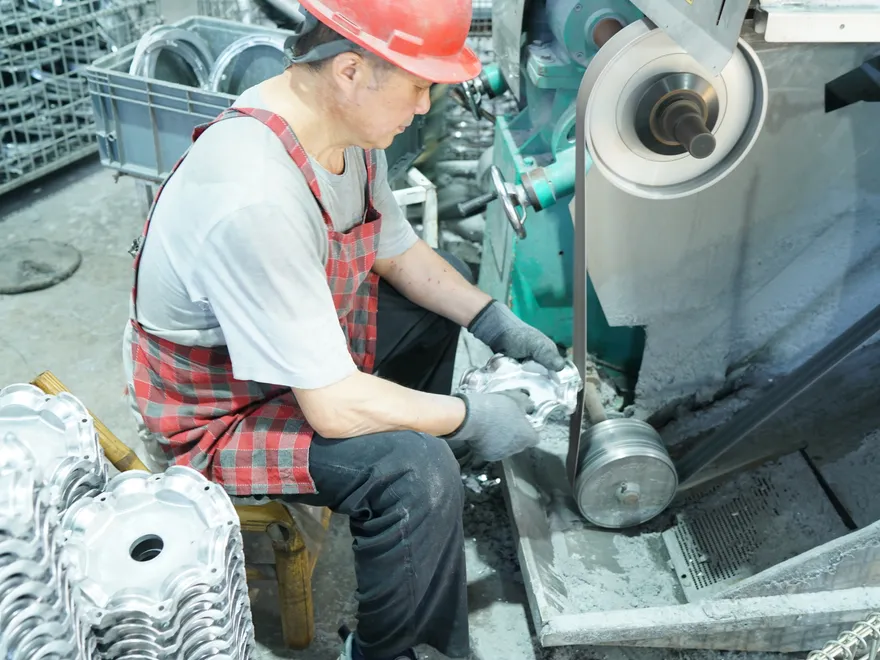
“We paid for the mold” is one of the most common sentences in OEM lighting, and one of the least precise. Paying a tooling charge, owning the tool, holding the drawings, and being able to move production to another factory are four different things. Contracts routinely give a buyer the first and imply the last.
That gap matters because tooling is where an OEM relationship stops being reversible. It is also one of the clearest tests of whether you are dealing with a factory or an intermediary, a question covered in factory vs trading company. A private-label fixture built on a shared standard housing can be re-sourced in weeks. A fixture built on a custom die-cast body cannot be moved anywhere until the question of who holds that steel is answered.
This guide covers what tooling an LED fixture actually requires, what the money buys, and what to settle in writing before the first payment.
Key Takeaways
- “Tooling” is several tools. Die-cast dies, injection molds, extrusion dies and trim fixtures have different costs, lifespans and transferability.
- Paying an NRE charge is not the same as owning the tool, and owning the tool is not the same as being able to use it elsewhere.
- Ask what the tooling charge covers: first article, design revisions, sampling rounds, and who pays when a revision is needed.
- A mold has a finite life in shots and needs maintenance. Agree who maintains it and who pays when it wears.
- Custom tooling is not always the right answer. Modifying an existing platform is faster, cheaper and reversible, and it is the correct choice more often than buyers expect.
What Tooling an LED Fixture Actually Needs
“The mold” is usually several tools, and they differ enormously in cost and in how tied they are to one factory.
| Tool | What it makes | Relative cost | Notes |
|---|---|---|---|
| High-pressure die-cast die | Aluminium housings, heat sinks, brackets | Highest | Hardened steel, long lead time, the tool that defines the fixture |
| Injection mold | Diffusers, end caps, gaskets, plastic bodies | Medium to high | Multi-cavity molds cost more but lower unit price |
| Extrusion die | Linear housings and heat sink profiles | Lower | Comparatively cheap and quick to replace |
| Sheet metal tooling | Brackets, reflectors, chassis | Low to medium | Progressive dies cost more than simple bends |
| PCB stencil and test jigs | SMD board assembly and functional test | Low | Cheap but project-specific |
| Assembly and trim fixtures | Alignment, potting, aging racks | Low | Often overlooked and often factory-specific |
The practical consequence: a project can be “custom” in very different degrees. A custom lens on a standard housing needs one injection mold. A genuinely new fixture needs a die-cast die, one or more injection molds, sheet metal tooling and a set of jigs, and the lead time is measured in months rather than weeks.
Our LED manufacturing process guide covers where each of these sits in production.
What the Tooling Charge Covers
The charge is usually described as NRE (non-recurring engineering). What it includes varies far more than the number itself, and this is where disputes start.
Get answers to all six before paying:
- Which tools are included, itemised. A single figure covering “the mold” often turns out to cover one of the four tools the fixture needs.
- How many sampling rounds are included, and what happens when the first article needs changes.
- Who pays for design revisions, and whether the split changes depending on whose change it is. A buyer-initiated dimensional change and a factory-initiated manufacturability change are different situations.
- Whether NRE is refundable or amortised. Some suppliers refund tooling against volume; some amortise it into unit price; some charge it outright.
- What documentation is delivered — 2D drawings, 3D models, tool drawings, material specification.
- What happens to the tool if the project stops after tooling but before production.
The refund and amortisation question deserves care. A tooling charge amortised into the unit price is a real cost that keeps being paid, and it should stop being paid once the recovery volume is reached. Put the recovery volume in the contract.
The Three Ownership Models
This is the part that “we paid for the mold” fails to distinguish.
Factory-owned tooling. The supplier funds and owns the tool, usually recovering the cost in the unit price. Lowest upfront cost, least control. The fixture is effectively a supplier product that you brand. Perfectly reasonable for a distributor buying a proven design.
Buyer-paid, factory-held. You pay the NRE and the tool sits in the supplier’s plant. This is the most common arrangement, and also the most misunderstood. Paying for a tool does not automatically create a right to remove it, and it certainly does not create the ability to use it elsewhere without the surrounding process knowledge. Whether you can move it depends entirely on what the contract says.
Buyer-owned with transfer rights. You pay, you own, and the contract states the conditions under which the tool is released to you or to another factory. This is what most buyers assume they are getting under model two. It costs more and requires explicit drafting.
For most brand owners the honest ranking is: model one for standard products, model two with a clear ownership clause for modest customisation, and model three only where the design is genuinely proprietary and re-sourcing is a real strategic requirement.
Mold Life, Maintenance and Wear
A tool is a consumable with a long life, not a permanent asset. Die-cast dies are rated in shots, and both the rating and the achieved life depend on alloy, part geometry, cycle discipline and maintenance.
Three things to agree in writing:
- Who maintains the tool, at what interval, and whether maintenance is included in the unit price.
- Who pays when it wears out. A tool that has produced its rated life has been consumed, and a replacement is a new tooling charge. This is normal, but it should not be a surprise.
- What quality drift is acceptable as the tool ages. Flash, dimensional drift and surface finish degrade gradually. Agreeing the acceptance criteria up front avoids arguing about it in year three.
Ask also whether the tool is stored in production condition or simply set aside when a project pauses. A die left uncleaned and unprotected for a year is not the asset the invoice described.
Transferring Tooling to Another Factory
The reason buyers care about ownership is portability, so it is worth being blunt about how portable a tool actually is.
A die-cast die is designed for a specific machine tonnage, shot sleeve and cooling arrangement. Moving it to another plant usually means a re-qualification programme: trial shots, dimensional verification, adjustments to gating or cooling, and a fresh first-article approval. The tool transfers. The process does not transfer with it.
Practical implications:
- Budget time and money for re-qualification, not just for shipping a crate.
- Ensure you hold complete documentation, since a tool without drawings, material specification and process parameters is much harder to restart.
- Expect the first parts from a transferred tool to differ from the last parts from the original plant, and plan a qualification step rather than assuming continuity.
- Recognise that assembly jigs, test fixtures and process know-how are usually not covered by a tooling clause at all.
None of this argues against owning tooling. It argues against treating ownership as a guarantee of easy switching.
When Custom Tooling Is the Wrong Answer
The most valuable advice a factory can give a brand owner is often that tooling is not needed.
Modifying an existing platform — a different lens and beam angle, a bracket change, a driver or CCT variant, custom finish and branding — delivers a differentiated product with no die-cast tooling, in a fraction of the lead time, with none of the ownership complexity, and with a proven thermal and photometric baseline behind it, backed by the LM-79 measurement already held for that platform.
Custom tooling earns its cost when:
- The form factor genuinely does not exist, rather than existing in a slightly different shape.
- Volumes are high enough that unit-price savings recover the NRE within a defensible period.
- The design is a strategic asset you intend to protect and carry across suppliers.
- A regulatory or installation constraint makes an existing housing unusable.
It rarely earns its cost when the driver is aesthetic differentiation at modest volume, which is most of the requests that arrive framed as “we need our own mold”.
The Clauses to Get in Writing
- Itemised tooling scope — every tool the project requires, listed.
- Ownership, stated explicitly, and whether it changes on full payment or on reaching a volume.
- Transfer rights and conditions — notice period, outstanding balances, who pays shipping and re-qualification.
- Documentation deliverables — 2D, 3D, tool drawings, material and process specification.
- Sampling rounds included, and the cost split for revisions by origin of the change.
- Amortisation and recovery volume, with the price adjustment that follows once recovery is complete.
- Maintenance responsibility and replacement terms at end of tool life.
- Storage and condition obligations while a project is paused.
- Confidentiality and design ownership, kept separate from tool ownership, since they are different rights.
Point nine is worth emphasising. Owning a physical tool and owning the design are distinct, and a contract can grant one while leaving the other ambiguous.
The Bottom Line
Tooling decisions are the point where an OEM relationship becomes hard to reverse, so they deserve more attention than the invoice line suggests. Establish which tools the project actually needs, what the charge covers, who owns what, and what would have to happen if you ever moved. Then check whether you need custom tooling at all, because a modified existing platform answers more briefs than the market admits.
Tell us what the product has to do and what volume you expect, and our engineers will say plainly whether it needs new tooling or whether an existing platform can be modified to fit. We manufacture in-house across die-casting, SMT, assembly and testing, so the answer comes from the people who would cut the tool rather than from a trading desk. See OEM and ODM services for how projects are structured, and the OEM LED lighting guide for the wider sourcing picture.
FAQ
Who owns the mold in an OEM lighting project? It depends entirely on the contract, and paying a tooling charge does not settle it. Three models exist: factory-owned with the cost recovered in unit price, buyer-paid but factory-held (the most common and most misunderstood), and buyer-owned with explicit transfer rights. If portability matters, the transfer conditions have to be written down rather than assumed.
What does a tooling or NRE charge actually cover? That varies more than the figure does. Ask for an itemised scope: which tools are included, how many sampling rounds, who pays for revisions and on what basis, whether the charge is refundable or amortised, what documentation is delivered, and what happens to the tool if the project stops before production. A single number described as “the mold” often covers one of several tools the fixture needs.
How long does a die-cast mold last? It is rated in shots, and the achieved life depends on alloy, part geometry, cycle discipline and maintenance. Treat the tool as a long-life consumable rather than a permanent asset: agree who maintains it, at what interval, who pays for replacement at end of life, and what dimensional and surface drift is acceptable as it ages.
Can I move my tooling to another factory? Physically, usually yes, if the contract allows it. Practically, the tool transfers but the process does not. A die is matched to a specific machine and cooling arrangement, so a move means trial shots, dimensional verification and a fresh first-article approval. Budget for re-qualification, make sure you hold the full documentation set, and remember that jigs and test fixtures are often outside the tooling clause entirely.
Do I need custom tooling for a private-label product? Often not. Changing the lens, bracket, driver, colour temperature, finish and branding on an existing platform produces a differentiated product with no die-cast tooling, much shorter lead time, and a proven thermal and photometric baseline. Custom tooling earns its cost when the form factor genuinely does not exist, volumes recover the investment, or the design is a strategic asset you intend to carry between suppliers.
What is the difference between owning the tool and owning the design? They are separate rights and a contract can grant one while leaving the other vague. Tool ownership concerns a physical asset sitting in a plant. Design ownership concerns the drawings, models and intellectual property. Ask for both to be addressed explicitly, along with confidentiality, rather than assuming that paying for steel secures the design behind it.