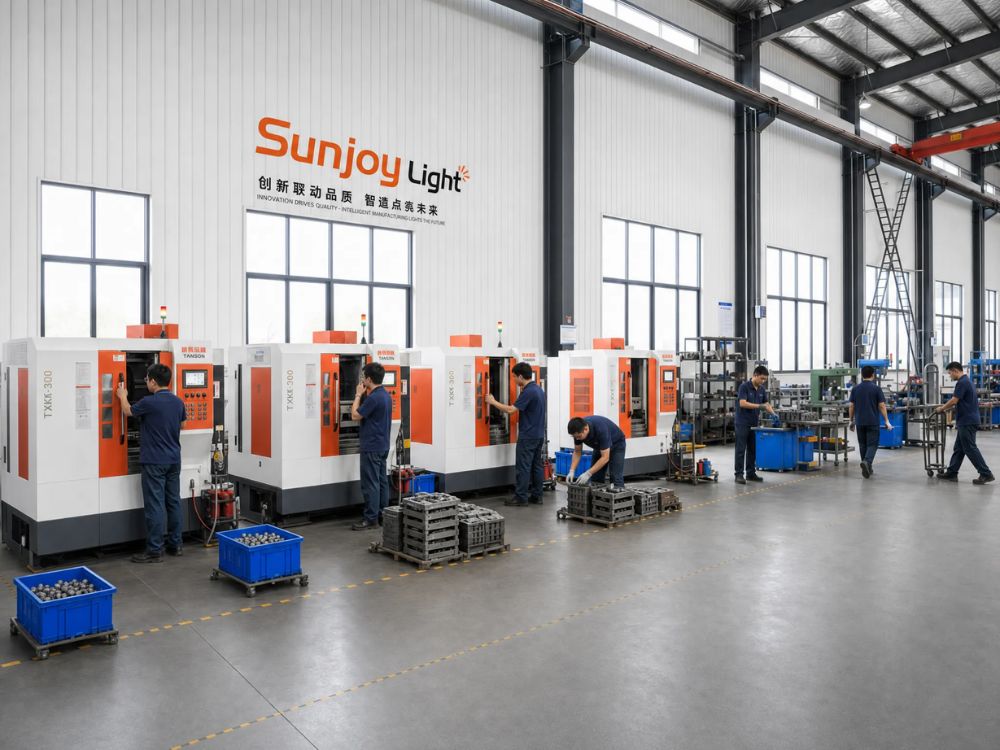
A factory makes the product; a trading company buys it from a factory, adds a margin and a logo, and resells it. Neither is illegitimate — traders serve real purposes for small mixed orders — but a trader presenting itself as a factory is the single most common deception in Chinese B2B sourcing, and it costs buyers exactly when it hurts most: on technical questions, quality disputes, and repeat-order consistency. The good news is that the disguise is thin. This guide gives you 12 checks, ordered from desk research to on-the-ground verification, that expose the difference in an afternoon — plus a scoring system for turning the answers into a decision.
Key Takeaways
- The registered business licence scope is the fastest single check: manufacturing licences say 生产/制造 (production/manufacturing); trade-only licences say 贸易/进出口 (trade/import-export).
- The strongest live test is stage-level evidence on demand: a factory can produce a solder-paste inspection record or burn-in log in minutes; a trader has to ask someone else.
- Traders fail hardest on engineering questions — custom photometrics, certification details, tooling timelines — because the knowledge lives in a factory they don’t own.
- No single check is conclusive; the 12-point scorecard below is designed so that a disguised trader cannot pass more than a handful.
- “Factory” is not automatically “better” — but you must know which one you’re paying, because the price, risk, and support models are completely different.
Why the Difference Matters (and When It Doesn’t)
Money and information both flow differently through the two supply chains:
Three failure modes follow from the diagram. Technical depth: ask a trader to modify a beam angle or explain a GB 3836 flameproof joint and the answer must round-trip to a factory engineer they may not even have access to. Accountability: when a batch fails in year two, the trader’s leverage over the factory is a purchase order, not a production line. Consistency: nothing stops a trader from switching factories between your first and second order — same logo on the carton, different solder inside.
When is a trader the right choice anyway? Small orders mixing many unrelated product categories below any factory’s MOQ, or markets where a consolidator’s local warehouse genuinely adds service. And one nuance the “factory good, trader bad” framing misses: almost every real manufacturer also sources something. A lighting factory that die-casts its own housings may still buy solar panels, batteries, camera modules, or accessory lines from specialist partners — because vertical integration into someone else’s specialty is bad engineering, not good marketing. The dividing line you are testing for is therefore not purity but disclosure: an honest supplier tells you, per product family, what is made in-house and what is produced with partners under their specification and QC. The disguise — claiming to manufacture what you merely resell — is the problem. Hence the 12 checks.
The 12 Checks
Desk checks (30 minutes, before you talk price)
1. Business licence scope. Ask for the 营业执照 (business licence) — any legitimate supplier shares it instantly. Read the registered scope line: manufacturing companies show 生产 (production) or 制造 (manufacturing) in scope; a scope limited to 贸易 (trade), 批发 (wholesale), or 进出口 (import/export) is a trading company by law, whatever the website says. Cross-check the company name on the licence against the certificates they send you — mismatched names are the classic tell.
2. Registered capital and founding year vs the story. A “25-year factory with 500 workers” registered two years ago with minimal capital is telling you two different stories at once. Founding year on the licence should roughly support the heritage claim — ours says 1999, and the company history hangs off it.
3. Certificate cross-verification. Take the certificate numbers — CE, FCC, CCC, and for hazardous-area gear the Ex certificate — and check the holder name on each. Certificates held in a different company’s name mean you’re looking at borrowed paperwork. Our GB/T 3836 certificate ZJEx25.1185 names the manufacturer; that’s what yours should do too. (What each certificate must contain is its own topic — see the CE Declaration of Conformity checklist.)
4. The address test. Map the registered address. Industrial zone with a plausible factory footprint, or an office tower floor? Then ask for the factory address and see whether it matches the licence. Traders often show a rented showroom in a lighting wholesale city while the “factory” is elsewhere — or nowhere.
Conversation checks (one call, no travel)
5. Stage-level evidence on demand. This is the highest-signal check on the list. Pick any stage from a real production chain — ask for a recent solder-paste inspection record, a burn-in log, an IQC report from last month’s batch. A manufacturer pulls these from their own system in minutes; a trader must request them from someone else, and the delay (or the excuse) is the answer. Our own eight-stage process walkthrough shows exactly what evidence each stage produces.
6. The engineering-depth probe. Ask a question whose answer requires owning the design: “What’s the junction temperature at full load in a 45°C ambient?” or “Can you change the Type III optic to a Type II for a narrow road — what’s the tooling implication?” Factories answer with numbers and trade-offs; traders answer with “no problem” (a red flag in itself) or a two-day delay.
7. Live video walk of the line — unscheduled. Video calls are free. Ask, on the current call, to walk the line now: SMT machines running, aging racks powered, your product family visible in process. A factory can lift the phone and walk; a trader needs to arrange a visit to someone else’s building. Scheduled tours can be borrowed; spontaneous ones can’t.
8. Who answers the WhatsApp at 9 p.m.? Send a moderately technical follow-up out of hours. Factory sales engineers escalate to engineering and come back with substance; trading company salespeople come back with reformatted brochure text. Over two or three exchanges the pattern is unmistakable.
Commercial checks (in the quote and contract)
9. VAT invoice type. Chinese manufacturers issue VAT special invoices (增值税专用发票) from their own name for goods they produce; ask whether the commercial invoice and VAT invoice will carry the same company name as the business licence and the certificates. A supply chain where the names don’t line up has an extra company in it.
10. MOQ logic and customization pricing. Factory MOQs follow production logic — batch sizes, tooling amortization — and customization quotes come with concrete engineering lead times (“new lens tooling, 45–60 days,” as on our OEM/ODM page). Trader MOQs follow whatever their factory imposes plus caution, and customization answers stay vague because someone else owns the tooling decision.
11. Third-party audit and inspection posture. Ask two questions: “Can I commission an SGS/TÜV/BV factory audit at your site?” and “Do you accept third-party pre-shipment inspection with the balance payment gated on the report?” Factories say yes to both — inspections happen at their own premises. Traders must negotiate your auditor into a building they don’t control, and the hesitation shows.
12. The golden-sample teardown. Order a sample and open it. Component brands matching the quote (driver, LED), solder quality, gasket seating, torque marks — then ask specific questions about what you found inside. A manufacturer discusses their own build choices fluently; a reseller has never seen the inside of the product they sell.
Scoring: The 12-Point Verdict
Two scoring notes worth internalizing. First, the checks are deliberately redundant — a disguised trader can survive any three of them, but not eight, because faking a production line, its paperwork, and its engineers simultaneously costs more than just being a factory. Second, one hard lie beats any soft score: a certificate in another company’s name or a licence-name mismatch isn’t a “point deducted,” it’s the end of the evaluation.
Running the Checks on Us
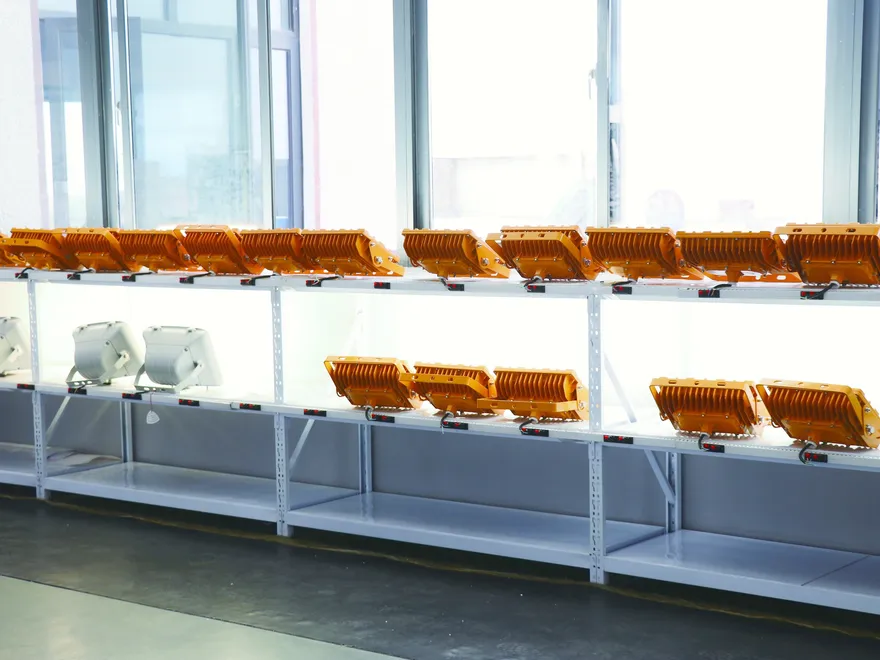
Fair is fair — here’s how Sunjoylight scores against its own list. Business licence: Changzhou Shuangjia Electrical Appliance Co., Ltd., manufacturing scope, founded 1999 (check 1–2). Certificates in the manufacturer’s name, including GB/T 3836-2021 certificate ZJEx25.1185 for the explosion-proof line (check 3). The eight production stages are photographed on our own floor, and a live video line-walk is available on any call (checks 5–7). Third-party audits and PSI with balance-gated payment: accepted as standard terms (check 11).
And the disclosure the article says you should demand, applied to ourselves: our core industrial luminaire lines are engineered and built on that floor, while for certain complementary items in the wider range — specialist components and accessory categories where partner factories are the right engineering answer — we work with long-term partners under our specification, with the same incoming inspection and pre-shipment terms applying either way. Ask us which is which for the exact models on your inquiry and you’ll get a straight answer per SKU — that question is free, and how a supplier handles it tells you more than any badge.
Frequently Asked Questions
Is buying from a trading company always a mistake? No. For small orders spanning many unrelated categories, or below-MOQ quantities, a transparent trader adds real value. The mistake is not knowing which model you’re paying for — the price, engineering support, and recourse are structurally different, and a trader charging factory-direct expectations delivers neither.
What’s the single fastest check? The business licence scope (check 1): one document, one line, legally binding. 生产/制造 in scope means licensed to manufacture; a trade-only scope settles the question regardless of what the website claims. Pair it with certificate holder names (check 3) and you’ve spent ten minutes.
Can’t a trader just pass the video tour with a partner factory? A scheduled tour, sometimes — which is why check 7 specifies an unscheduled walk during the current call, and why checks 5 and 12 exist: producing internal QC records in minutes and discussing the product’s internals fluently require owning the line, not visiting it.
Do Alibaba “Verified Supplier” or similar badges settle it? They help but don’t settle it — verification tiers confirm a company exists and has been inspected at some level, not that the entity selling to you manufactures the specific product you’re buying. Run checks 1, 3, and 5 regardless of platform badges.
What if a supplier scores well but sources some product lines? That’s not a failure — it’s the industry norm, and the right question is not “do you source anything?” but “will you tell me what, per family?” Nearly every genuine manufacturer complements its own lines with partner-produced categories (panels, batteries, camera modules, accessory items) where a specialist does it better. Apply the checklist to the specific family you’re buying, and treat a supplier’s willingness to disclose in-house vs partner-produced per SKU as a pass signal in itself — evasion on that question is the actual red flag. It’s how we answer for our own range, model by model, on request.
The Bottom Line
The factory-versus-trader question isn’t answered by websites, badges, or how confidently someone says “we are factory” — it’s answered by documents whose names match, evidence that appears in minutes, engineers who answer with numbers, and a line you can walk on today’s video call. Twelve checks, one afternoon, and the disguise falls off. Then buy from whichever model fits your order — knowingly, at the right price, with the inspection terms that keep everyone honest.