150W LED Flood Light

The 150W LED flood light occupies the band most buyers skip past: above the 100W volume rating, below the 200W class that dominates project specifications. On an 8-12 m pole over a yard, an apron edge or a car park, it is frequently the fixture that holds the target level with the least connected load - and it is the rating buyers most often over-specify their way past.
This one has been measured. A production 150W unit tested on a calibrated goniophotometer delivered 20,422 lm at 143.4 W - 142.3 lm/W - with a 59.4° × 57.8° beam peaking at 20,711 cd, a power factor of 0.960 and an EEI of 0.100 (A++). The full report is downloadable below, alongside the reports for our 200W and 300W units.
Measured, Not Claimed
Third-party goniophotometer test of a production unit. Download the full documents below — no email gate.
| Power consumed | 143.4 W @ 221.3 V |
| Power factor | 0.960 |
| Luminous flux | 20,422 lm |
| Efficacy | 142.3 lm/W |
| Peak intensity | 20,711 cd |
| Beam angle | 59.4° H × 57.8° V |
| Energy class | EEI 0.100 · A++ |
Every Measured Unit, Published
All units tested on a calibrated HPG1800 goniophotometer. We publish the strong results and the modest ones — the economy build reads lower than the flagship, and both numbers are real.
Where 150W Fits
Selection guidance from the measured beam data - confirmed with a free DIALux study for your site.
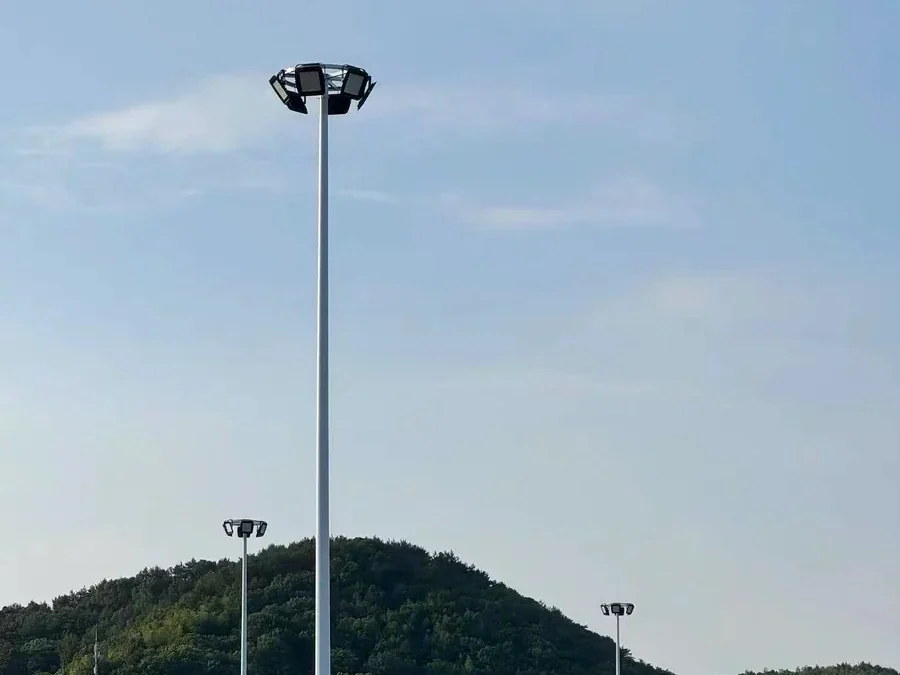
The measured 59° beam works from 8-12 m: yard poles, apron edges, car park columns and building corners above the 100W band.
From 10 m the beam holds a working area of roughly 11-12 m across at useful levels. The exact figure comes from the IES file at your geometry, which we supply.
Equipment yards, loading and apron areas, car parks, perimeters, industrial compounds, recreation areas in multiples.
Below 8 m, 100W usually covers with less glare. Above 12 m or for pitch and mast duty, move to 200-400W.
SJTG Housings Available at 150W
| Series | Design Highlight | Dimensions (L×W×H) | |
|---|---|---|---|
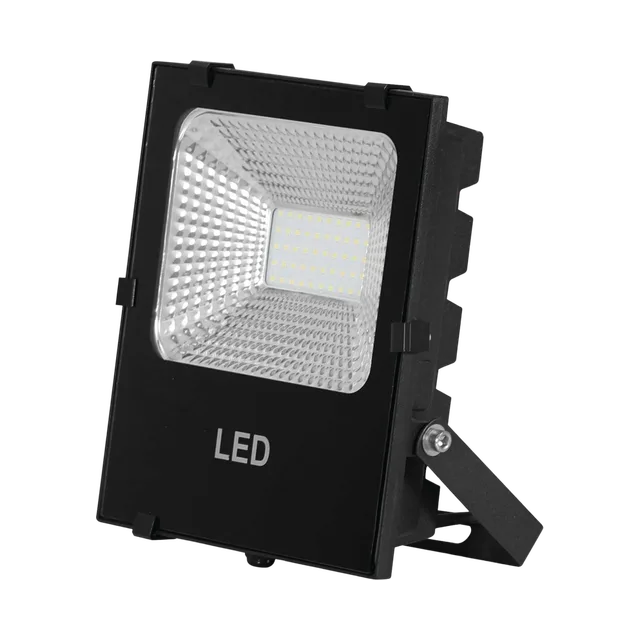 | SJTG601 | High-purity aluminum reflector, uniform output | 317 × 90 × 314 |
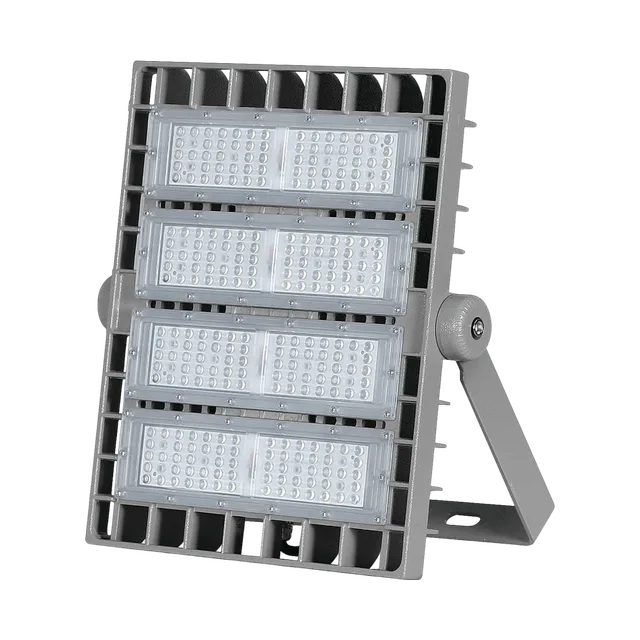 | SJTG608 | Toughened glass + die-cast body, industrial grade | 430 × 85 × 380 |
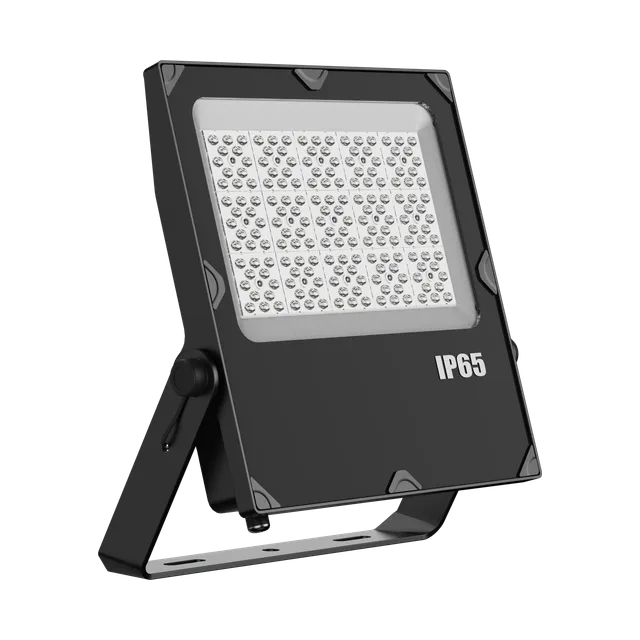 | SJTG612 | Projection-style head, energy-saving design | On request |
Dimensions in mm from the factory catalog. All housings: die-cast aluminum, IP65. SJTG612 also offers a 150W variant; dimensions on request. Full datasheet and IES/LDT files supplied with the quotation.
Where This Class Works
Three duties this wattage is specified for most often — and what changes in the specification for each.
Yards, aprons and loading areas
150W sits in the gap where 100W starts thinning out and 200W becomes more fixture than the position needs. From 8-12 m it covers a working area with a measured 59° beam, which is why it is a common choice for apron edges, equipment yards and dock frontages.
- 8-12 m mounting band
- 59.4° H × 57.8° V measured beam
- IP65 sealed die-cast body
Courts, car parks and perimeters
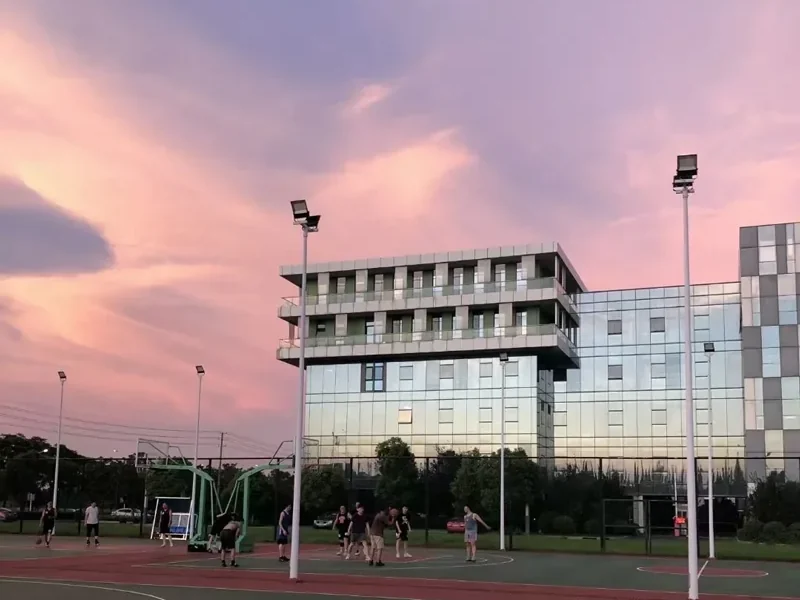
Where a car park or a recreation area needs real coverage but not stadium output, several 150W units hold the level with lower pole loading than fewer large heads - and with a measured power factor of 0.960, they do it without inflating the apparent load on the supply.
- PF 0.960 measured under load
- Lower pole loading than high-power heads
- Photocell and dimming configurable
Industrial sites and compounds
Industrial positions punish fixtures that run hot or seal badly. The 150W class here uses the same die-cast bodies and IP65 sealing as the high-power range, with the driver cavity separated from the LED chamber on the housings built for warm climates.
- Separated driver cavity option (SJTG601)
- Toughened glass option (SJTG608)
- Surge protection specified per project
How It Goes Up
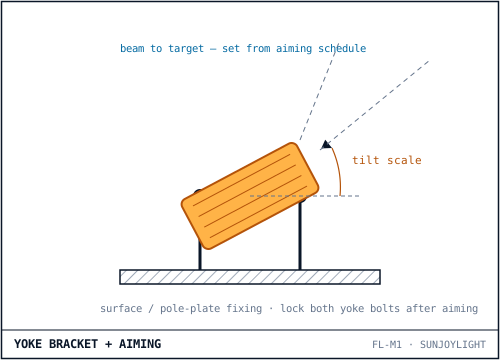
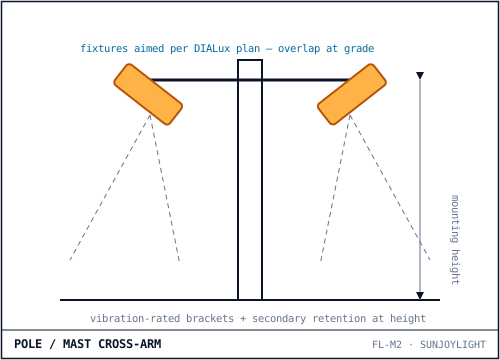
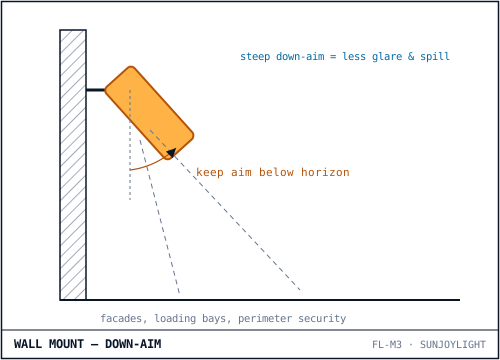
The mounting methods this fixture class is supplied for. Installation photographs from delivered projects are being catalogued and will be added alongside.
Every Order Ships With the Paperwork
The documents an engineer needs to verify the design and an importer needs to clear customs — supplied as standard, not on request.
IES / LDT files for the exact housing and optic quoted, so your designer models the fixture you are buying.
A free DIALux study from your dimensions — lux, uniformity and fixture count verified before you commit.
CE / FCC / CCC documentation with the type-test reports behind it, plus the Ex certificate where applicable.
Driver spares quoted with the order and an engineer contact who answers after the invoice is paid.
Straight Answers to the Questions Buyers Ask in Forums
What buyers report in sourcing forums and marketplace reviews — and how to check any supplier, including us.
This 150W unit measured 142.3 lm/W - honest, and lower than our 200W flagship at 175.4 lm/W. Different builds perform differently, and a supplier who only ever quotes their best figure is quoting a different product than the one you may be buying. Both reports are downloadable below.
This unit measured PF 0.960 under load. Cheap floods run far lower, which inflates apparent power, heats wiring and can trip limits on multi-fixture installations. It is one line on the report - read it before ordering by the pallet.
Enquiries jump from 100W to 200W because those are the round numbers in the catalogue. At 8-12 m on a yard or car park, 150W frequently holds the target level with a smaller fixture and less connected load. Send the dimensions and the layout will say which.
150W of quality LED is a working replacement for a 400W metal halide flood once optics and lumen depreciation are accounted for. Validate with the IES file at your geometry rather than the equivalence table - the table sizes replacements, the calculation sizes designs.
150W LED Flood Light — Answered
How many lumens does a 150W LED flood light produce?
Our tested production unit measured 20,422 lm at 143.4 W - 142.3 lm/W - on a calibrated goniophotometer, with a power factor of 0.960 and an EEI of 0.100 (A++). The full report is downloadable on this page. Treat listings claiming far more per watt at this rating with suspicion, and ask for the measurement rather than the brochure figure.
What does a 150W LED flood light replace?
Typically a 400W metal halide flood. The measured 20,422 lm matches what those fixtures delivered in practice once real-world lumen depreciation is accounted for, at roughly a third of the connected load and with no restrike delay. Validate the swap with the IES file at your mounting geometry.
Should I choose 150W or 200W?
Mounting height decides it. At 8-12 m over a yard or car park, 150W frequently holds the target level with less connected load; above 12 m, or where the position must reach a pitch or a wide apron, 200W earns the extra power. Send the dimensions and target level and the layout answers it directly rather than by rule of thumb.
Which 150W housing should I choose?
SJTG601 uses a high-purity aluminum reflector in a compact body and suits general yard and perimeter positions. SJTG608 adds a toughened glass front and a heavier die-cast body for impact-exposed and industrial duty. SJTG612 offers a projection-style head. All carry the same certification set.
Send Us the Space, Not Just the Wattage
Share the dimensions, mounting height and the level you need to hold. Our engineers return a lighting layout with fixture count, aiming and the photometric files behind it — before you commit to anything.
Floor plan or site dimensions, mounting height, target lux or the standard you must meet.
A DIALux study with fixture count, layout, aiming and IES files — at no cost.
Your engineer checks the numbers against the standard. Only then does a quotation matter.
Manufacturing in Changzhou since 1999 · Shipping to 50+ countries · CE / FCC / CCC
Tell us about your project.
Get a quote within 24 hours.
Share your application — environment, requirements, quantity. A real engineer responds with a tailored quote, IES files, and timeline within one business day.