Solar Flood Light
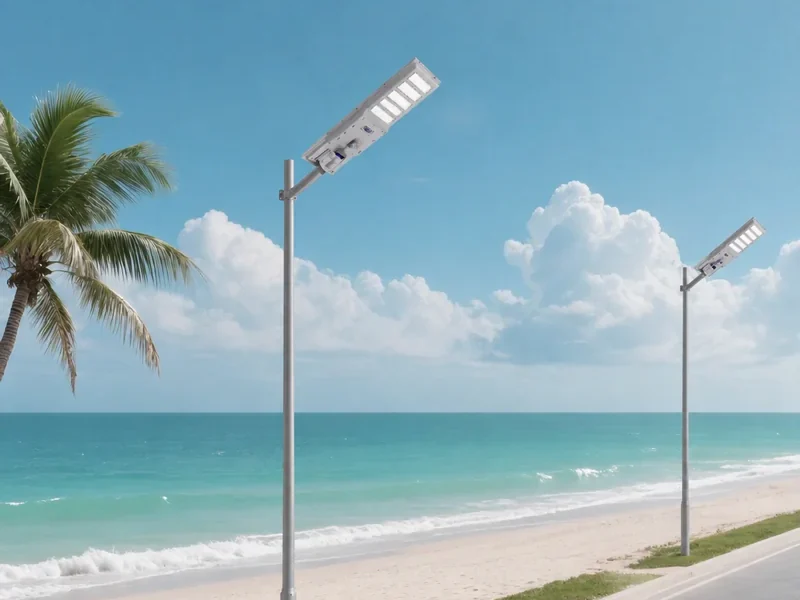
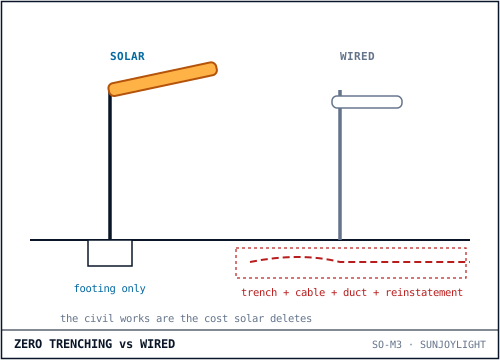
A solar flood light is the answer to a costing problem rather than a lighting one. The fixture is rarely the expensive part of lighting a yard corner, a sign, a gate or a perimeter — the trench, the armoured cable, the ducting and the electrician are. Once the position sits more than a few tens of metres from a supply, an off-grid flood is frequently cheaper installed than a grid fixture is to connect, and it arrives without a permit conversation about digging up a surface.
Two families of outdoor solar flood light fixtures cover the range. SJTG620S is a remote-panel solar floodlight from 50W to 300W: the LED head aims at the target while the polysilicon panel is sited and angled for the sun, which is what makes signage, facades and shaded positions workable. SJTG621S is a slim aluminium projector from 100W to 500W for larger areas and exposed sites. Both run typical 12-hour configurations — with panel and battery engineered to your location's worst-month sun-hours, not to a universal brochure figure.
Choosing a Solar Flood Light
The position decides the format; the location decides the sizing. We run the sizing per project.
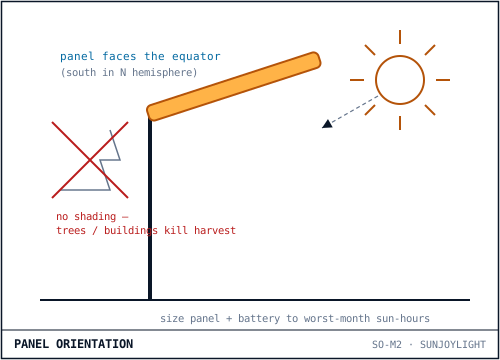
SJTG620S. The remote panel lets the head aim at the target while the panel faces the sun — the only workable arrangement where those two directions differ.
SJTG621S. The slim aluminium projector covers 100–500W for wider areas, exposed positions and coastal sites where a plastic body ages faster.
Panel watts × worst-month peak sun hours must exceed the LED's nightly consumption. A motion-boost profile can extend autonomy through cloudy spells dramatically on low-traffic positions.
If mains is already at the position, or the duty is all-night full output on a critical area, a grid flood is usually the better engineering. We will say so — our LED flood range covers 50W to 1200W.
Solar Flood Models
| Model | Power Options | Typical Run-Time | Body Material | Design |
|---|---|---|---|---|
| SJTG620S | 50 / 100 / 200 / 300W | 12 hours | ABS + Polysilicon | Remote panel — aim the light, face the sun |
| SJTG621S | 100 / 200 / 300 / 400 / 500W | 12 hours | Aluminum | IP65 slim projector |
Data from the factory catalog. Run-times are typical configurations — final panel and battery sizing is engineered to your site's sun-hours and duty profile. Full datasheet on request.
Where This Class Works
Three duties this wattage is specified for most often — and what changes in the specification for each.
Yards, compounds and access areas
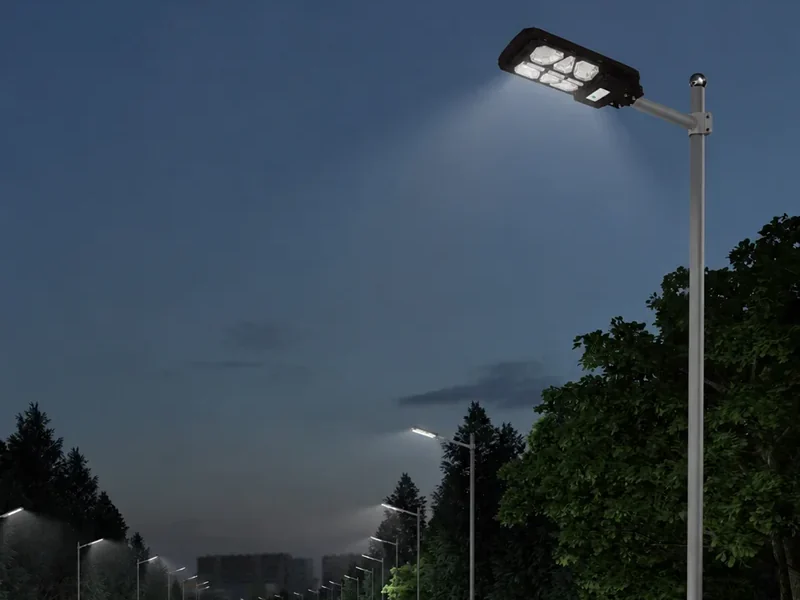
The classic solar flood case: a yard corner, a gate, a turning area or a storage compound that sits 60 m from the nearest supply. The trench, the armoured cable and the electrician cost more than the fixture — and a solar flood removes all three from the scope.
- No trench, no cable, no metered supply
- Typical 12-hour run-time configuration
- PIR boost profiles stretch autonomy
Signs, billboards, flagpoles and facades
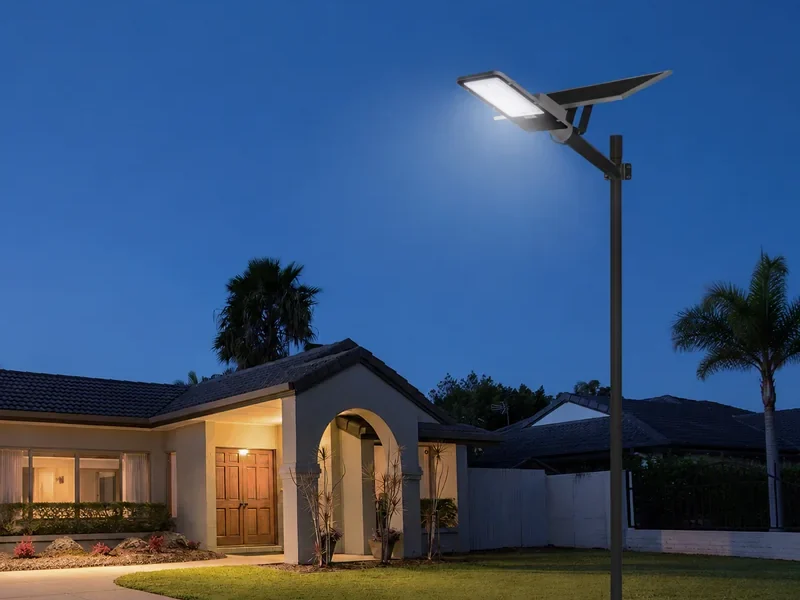
A remote-panel design separates the two jobs that pull in opposite directions: the light aims at the target, the panel faces the sun. That is what makes billboards, monument signs, flagpoles and shaded facades workable, where an all-in-one unit would have to compromise one or the other.
- Panel mounts and aims independently
- Flood beam for signage and facades
- Cable run between head and panel per site
Perimeters, farms and remote security
Boundaries, farm buildings and remote assets need light that arrives without infrastructure. Motion-boost profiles suit them particularly well — the fixture idles low all night and rises to full output on approach, which both extends autonomy and makes the activation itself a deterrent.
- Idle-then-boost profile on detection
- Aluminum bodies for coastal and exposed sites
- Sized to worst-month sun-hours, not annual average
How It Goes Up
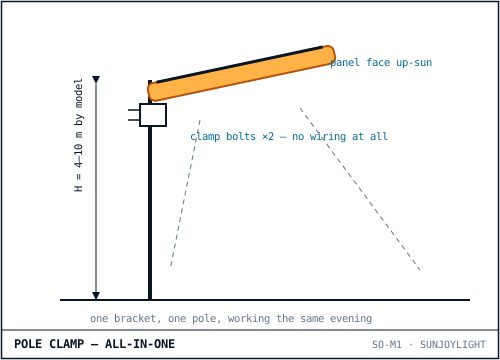
The mounting methods this fixture class is supplied for. Installation photographs from delivered projects are being catalogued and will be added alongside.
Every Order Ships With the Paperwork
The documents an engineer needs to verify the design and an importer needs to clear customs — supplied as standard, not on request.
IES / LDT files for the exact housing and optic quoted, so your designer models the fixture you are buying.
A free DIALux study from your dimensions — lux, uniformity and fixture count verified before you commit.
CE / FCC / CCC documentation with the type-test reports behind it, plus the Ex certificate where applicable.
Driver spares quoted with the order and an engineer contact who answers after the invoice is paid.
Straight Answers to the Questions Buyers Ask in Forums
What buyers report in sourcing forums and marketplace reviews — and how to check any supplier, including us.
Marketplace listings quote an LED figure a panel that size could never sustain — a widely circulated teardown found a "180W" unit measuring 50W. The arithmetic protects you: panel watts × your worst-month sun-hours must exceed the LED's nightly consumption. We quote panel watts, battery watt-hours and the dimming profile so you can run that check on our numbers before ordering.
Integrated units install fastest and suit open positions. A remote panel earns its extra bracket wherever the light must aim somewhere the sun is not: signage, facades, north-facing walls, positions shaded by a building or a tree line. Send a photo of the position and the answer is usually obvious from it.
Solar duty means a full charge-discharge cycle every single day, which is exactly where cheap ternary cells fade inside two years. LiFePO4 handles thousands of those cycles across a wide temperature range. Ask any supplier for chemistry, rated Wh and cycle life at a stated depth of discharge — all three, not just the word "lithium".
The same fixture behaves differently in Lagos, Riyadh and Hamburg. Sizing to the worst month rather than the brochure's sunny day is what keeps the light on in January. We configure panel, battery and dimming profile per project and say so — the alternative is a dark pole and a warranty argument.
Solar Flood Light — Answered
How bright is a solar powered flood light?
Brightness follows the LED rating and the dimming profile rather than the solar format itself: our solar powered flood lights span 50W to 500W, which covers everything from a monument sign to a yard or compound. The number that actually matters is nightly energy, not peak watts — a fixture running full output for twelve hours needs far more panel and battery than one idling at 20% and boosting on motion. Send the position and duty and we size it.
Do outdoor solar flood lights work in winter or cloudy weather?
Yes, when they are sized for it. The design rule is worst-month sun-hours, not the annual average: panel wattage, battery capacity and the dimming profile are configured to your latitude and climate, with cloudy-day autonomy on top. Motion-boost profiles extend autonomy substantially on low-traffic positions. A fixture sized on a brochure runtime rather than your location is the usual reason a solar light dies in January.
What is the difference between a solar flood light and a solar street light?
The optic and the aiming. A solar street light uses an asymmetric roadway distribution and stays near-horizontal over a carriageway; a solar flood throws a directional beam at a target you choose — a sign, a facade, a yard, a fence line. Street optics light a strip evenly; flood optics light an area or a surface you aim at.
Remote panel or all-in-one solar flood light?
Choose the remote-panel design (SJTG620S) whenever the light must aim somewhere the sun is not — signage, facades, north-facing walls, positions shaded by buildings or trees. Choose an integrated unit where the mounting position gets good sun and installation speed matters most. It is a siting decision, not a quality difference.
What battery do solar flood lights use?
LiFePO4 (lithium iron phosphate) — the chemistry suited to the daily full cycle that solar duty imposes, with thousands of cycles, wide temperature tolerance and stable behaviour in a sealed outdoor fixture. Ask any supplier for chemistry, rated watt-hours and cycle life at a stated depth of discharge; "lithium battery" alone tells you nothing about year three.
Are solar flood lights cheaper than mains flood lights?
The fixture costs more; the installation usually costs much less. Once a position sits more than a few tens of metres from a supply, the trench, cable, ducting and electrician typically outweigh the price difference — and there is no ongoing electricity cost or metered connection. Where mains is already present at the position, a grid flood is normally the better answer.
Send Us the Space, Not Just the Wattage
Share the dimensions, mounting height and the level you need to hold. Our engineers return a lighting layout with fixture count, aiming and the photometric files behind it — before you commit to anything.
Floor plan or site dimensions, mounting height, target lux or the standard you must meet.
A DIALux study with fixture count, layout, aiming and IES files — at no cost.
Your engineer checks the numbers against the standard. Only then does a quotation matter.
Manufacturing in Changzhou since 1999 · Shipping to 50+ countries · CE / FCC / CCC
Tell us about your project.
Get a quote within 24 hours.
Share your application — environment, requirements, quantity. A real engineer responds with a tailored quote, IES files, and timeline within one business day.