100W LED Street Light
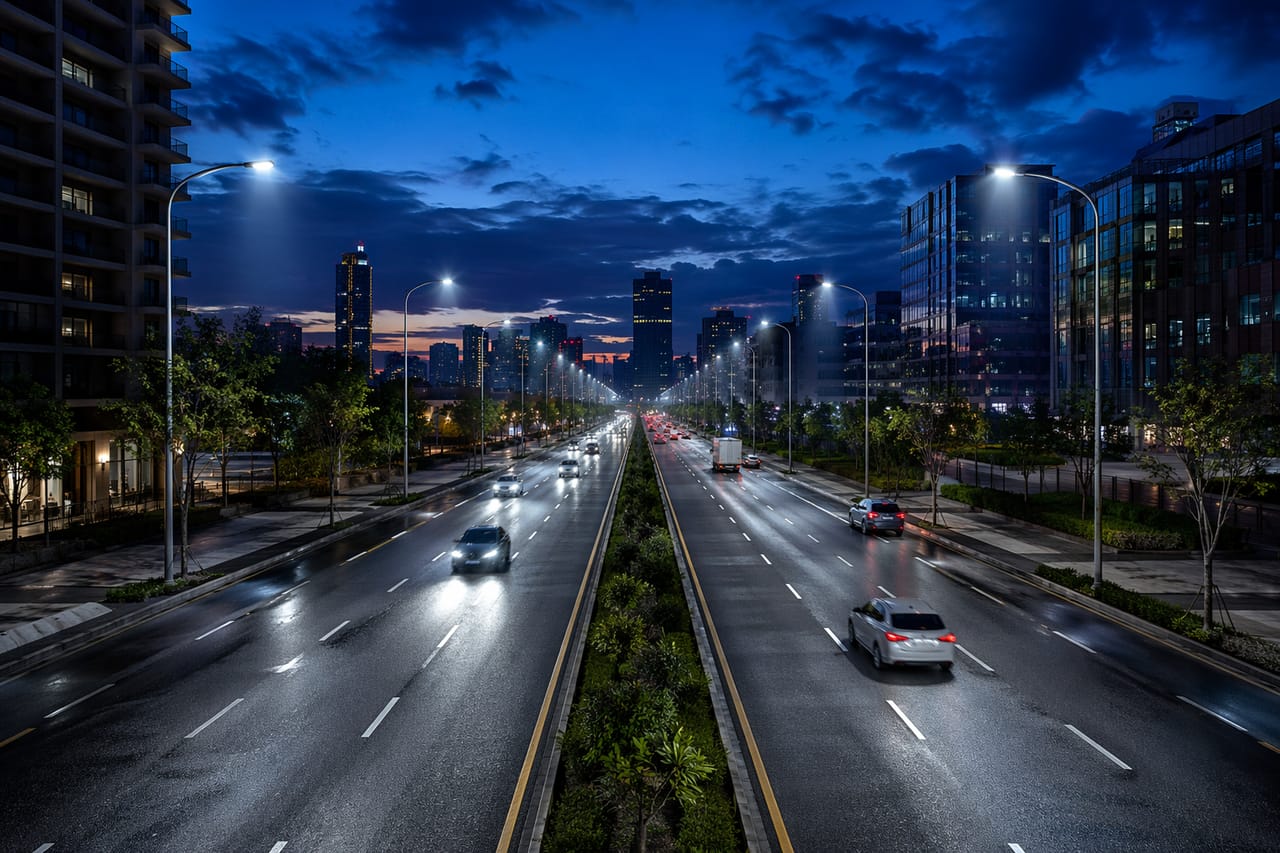
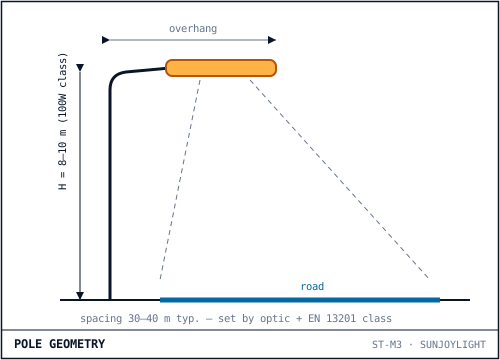
The 100W street light is the municipal standard for urban and distributor roads — the class that replaces 250W HPS on 8–10 m poles across most of a city network. At this wattage the optic is the specification: a roadway Type II or III distribution stretches light along the carriageway so poles can hold EN 13201 uniformity at 30–40 m spacing, which is where the project economics live.
All eight SJLD series carry the 100W point in their range, from the compact Golden Bean and Jet housings for residential mains to the modular and high-power platforms that scale to 480W on the same family styling — letting one tender cover residential lanes and trunk roads with a consistent streetscape.
Where 100W Fits
Keyed to EN 13201 road classes — we confirm optic and spacing with a roadway photometric study.
M3–M4 distributor and urban roads on 8–10 m poles; also the upper end of residential P-class where wide carriageways demand it.
With a quality Type II/III optic, 30–40 m single-side or staggered spacing typically holds class — the photometric calculation confirms per geometry.
100–120W LED is the standard replacement for 250W HPS, delivering comparable road luminance at well under half the energy.
Photocell-ready configurations (NEMA 7-pin or Zhaga Book 18 on request) with 0-10V/DALI drivers keep the smart-city path open.
SJLD Series Covering 100W
| Series | Name | Power Range |
|---|---|---|
| SJLD101 | Golden Bean | 20 – 150W |
| SJLD102 | Jet | 30 – 150W |
| SJLD103 | Stellar | 30 – 120W |
| SJLD104 | Torch | 30 – 150W |
| SJLD105 | Mustang | 60 – 480W |
| SJLD106 | Platypus | 60 – 240W |
| SJLD107 | LumaX | 50 – 300W |
| SJLD108 | Modular | 100 – 300W |
Power ranges from the factory catalog — each series offers 100W within its range. Full datasheet and IES/LDT files on request.
Where This Class Works
Three duties this wattage is specified for most often — and what changes in the specification for each.
Urban and distributor roads
The municipal standard: 100W on 8–10 m poles replacing 250W HPS across most of a city network. The optic decides the economics — a Type II or III roadway distribution stretches light along the carriageway so poles can sit 30–40 m apart while holding class.
- Type II / III roadway optics
- 30–40 m typical spacing, confirmed by calculation
- EN 13201 roadway study supplied free
Tunnels, underpasses and covered ways
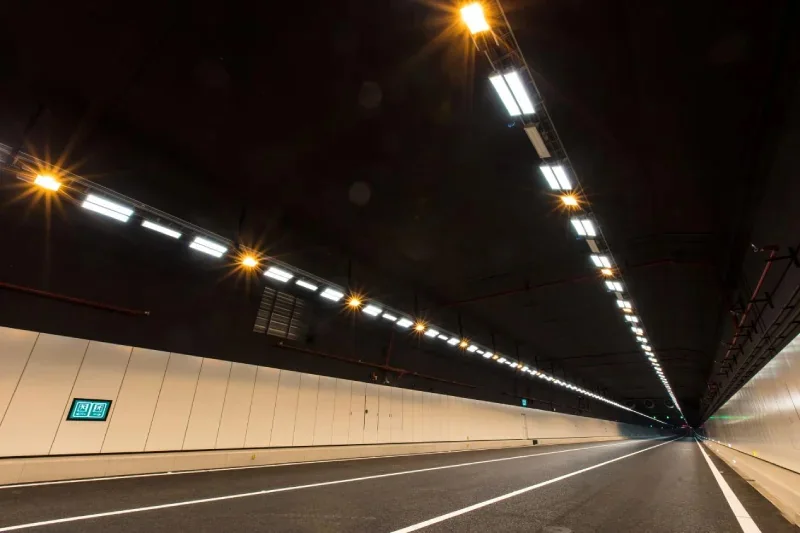
Enclosed roadways run their lighting continuously and are expensive to access for maintenance — which pushes the specification toward sealed bodies, long-life drivers and fixtures that can be serviced during short possession windows.
- Continuous-duty rated
- Sealed against wash-down and exhaust soot
- Long service intervals reduce closures
Internal roads, gates and inspection lanes
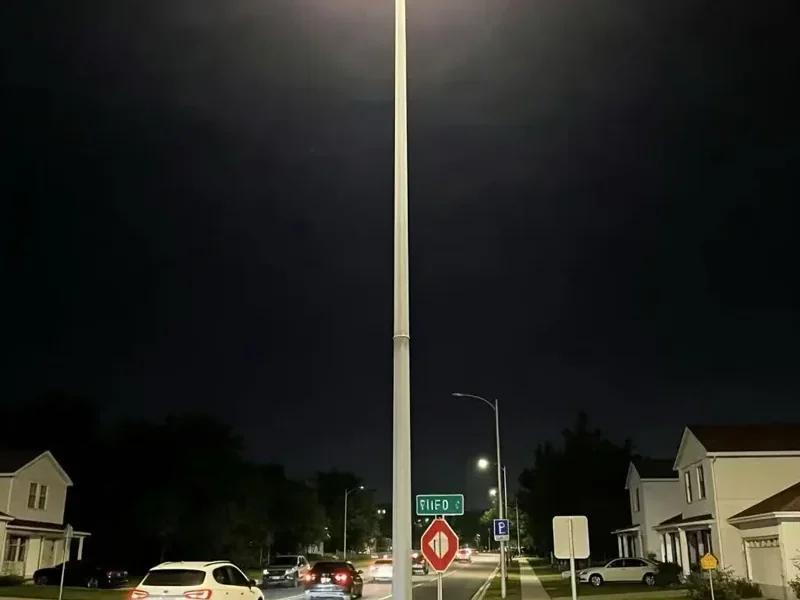
Site roads inside ports, plants and campuses carry the same lighting duty as public streets but sit in harsher air. Marine-grade options and IP66 sealing are the difference between a five-year and a fifteen-year asset.
- IP66 options for coastal and port air
- Photocell-ready NEMA / Zhaga receptacles
- Consistent streetscape across one family
How It Goes Up
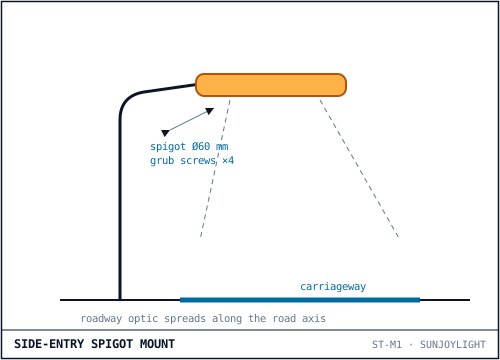
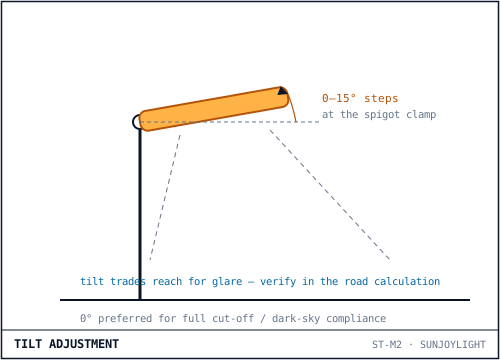
The mounting methods this fixture class is supplied for. Installation photographs from delivered projects are being catalogued and will be added alongside.
Every Order Ships With the Paperwork
The documents an engineer needs to verify the design and an importer needs to clear customs — supplied as standard, not on request.
IES / LDT files for the exact housing and optic quoted, so your designer models the fixture you are buying.
A free DIALux study from your dimensions — lux, uniformity and fixture count verified before you commit.
CE / FCC / CCC documentation with the type-test reports behind it, plus the Ex certificate where applicable.
Driver spares quoted with the order and an engineer contact who answers after the invoice is paid.
Straight Answers to the Questions Buyers Ask in Forums
What buyers report in sourcing forums and marketplace reviews — and how to check any supplier, including us.
The same 100W behind a Type II or Type III roadway optic covers different roads at different pole spacings. A tender that specifies wattage without distribution is leaving 20–30% of the budget on the table; specify the optic from the road cross-section.
“Poles every 40 m” is only true for a specific optic, height and EN 13201 class. We run the roadway calculation from your geometry and return the spacing with the IES files used — the document your engineer can verify, not a brochure promise.
100–120W LED replacing 250W HPS is the most repeated, most verified retrofit in street lighting. The savings claims that go wrong are the ones made without photometric files — insist on them from any bidder, including us.
A NEMA 7-pin or Zhaga socket costs little at manufacture and keeps every smart-city option open for 20 years. Networks that skipped it pay for luminaire swaps later; specify it in the tender line, fit shorting caps, and decide about controllers whenever the budget allows.
100W LED Street Light — Answered
What pole height and spacing suit a 100W LED street light?
8–10 m poles at 30–40 m spacing is the typical envelope for M3–M4 roads, with the exact figure set by the optic and the EN 13201 class. We run the roadway calculation from your cross-section and return spacing, tilt and the IES files used.
Does a 100W LED replace a 250W HPS street light?
Yes — that is the standard municipal swap. Directional LED optics put more of the light on the carriageway, so 100–120W typically matches or improves the road luminance of 250W HPS while cutting energy by more than half.
Which SJLD series should a tender specify?
For pure 100W residential/distributor rollouts, the compact series (Golden Bean, Jet, Torch) are the economical choice; if the same tender includes trunk roads or future upgrades, Mustang, LumaX or Modular keep one family across all wattages. We match the series to the tender line items on request.
Are photocell and smart-city options available?
Yes. SJLD fixtures can be configured with NEMA 7-pin or Zhaga Book 18 receptacles and dimmable drivers as part of the OEM specification, so networks can start with dusk-to-dawn photocells and add smart controllers later without touching the luminaire.
Send Us the Space, Not Just the Wattage
Share the dimensions, mounting height and the level you need to hold. Our engineers return a lighting layout with fixture count, aiming and the photometric files behind it — before you commit to anything.
Floor plan or site dimensions, mounting height, target lux or the standard you must meet.
A DIALux study with fixture count, layout, aiming and IES files — at no cost.
Your engineer checks the numbers against the standard. Only then does a quotation matter.
Manufacturing in Changzhou since 1999 · Shipping to 50+ countries · CE / FCC / CCC
Tell us about your project.
Get a quote within 24 hours.
Share your application — environment, requirements, quantity. A real engineer responds with a tailored quote, IES files, and timeline within one business day.