400W LED Flood Light
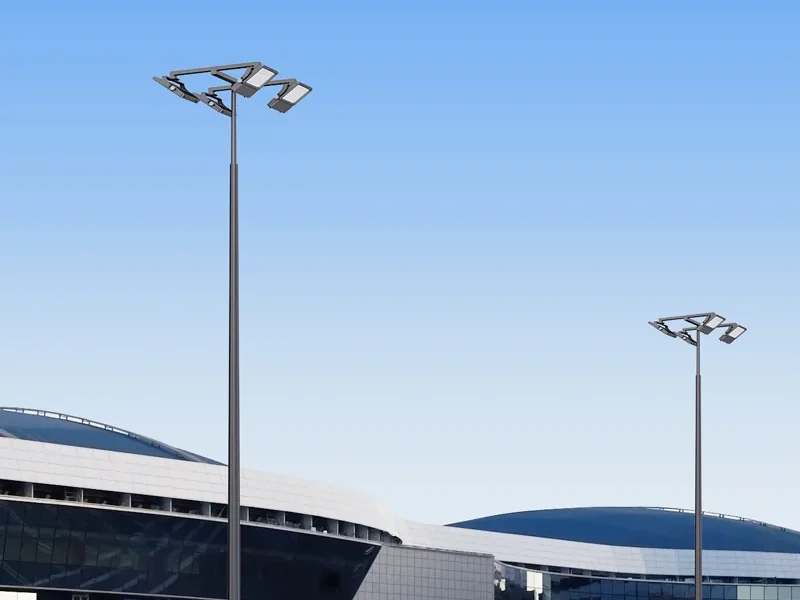
At 400W, flood lighting changes character: this is the class where fixtures stop lighting corners and start lighting venues. Training pitches, high-mast rings over yards and interchanges, port aprons and large facades are 400W territory — mounted at 12–30 m, aimed in designed patterns, and specified from photometric files rather than wattage lists.
Four SJTG housings carry a 400W variant, from the compact multi-module SJTG606 to the modular SJTG611 flagship that combines aimable units per pole. All are die-cast aluminum, IP65-sealed, and delivered with the IES/LDT files a designer needs to lay out the site before ordering.
Every Measured Unit, Published
All units tested on a calibrated HPG1800 goniophotometer. We publish the strong results and the modest ones — the economy build reads lower than the flagship, and both numbers are real.
Where 400W Fits
Selection guidance by mounting height and target — confirmed by a free DIALux study for your site.
12–30 m: sports poles, high-mast crowns, port and yard masts. Below 12 m, 200–300W usually covers better with less glare.
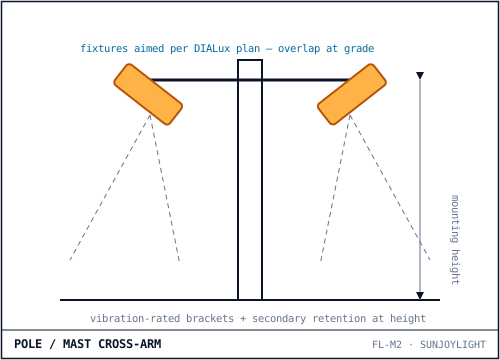
Narrow beams (≤40°) throw to the coverage edge from height; medium beams fill cores. High-mast rings mix both per the aiming plan.
Class II/III training pitches (in multiples per pole), high-mast fixture rings, container yards, rail depots, large facades.
For coastal and port duty, specify the salt-spray-tested finish and stainless external fasteners; surge protection is standard practice at mast height.
SJTG Housings Available at 400W
| Series | Design Highlight | Dimensions (L×W×H) | |
|---|---|---|---|
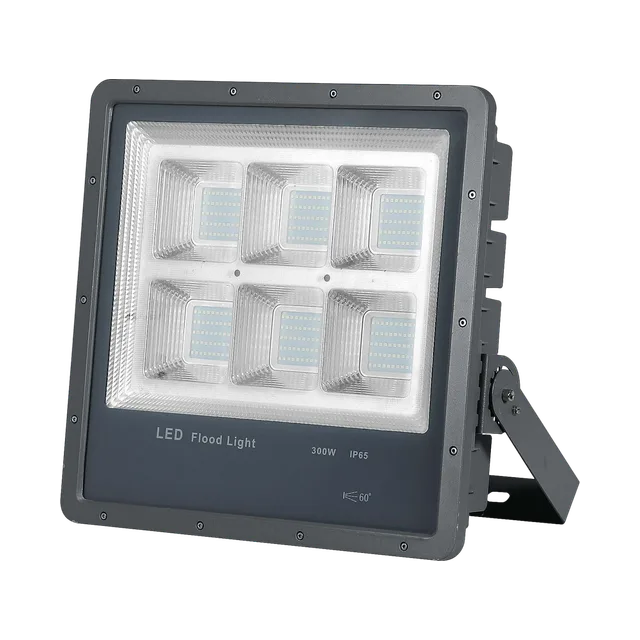 | SJTG603 | Toughened glass front, impact-resistant body | 425 × 170 × 450 |
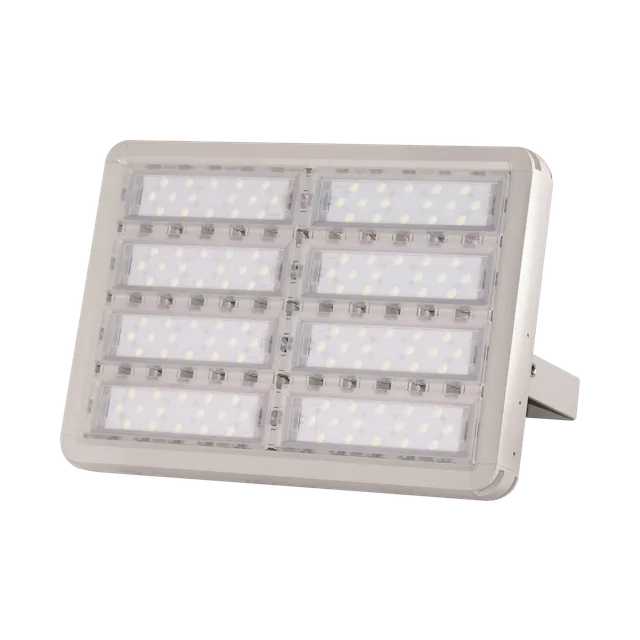 | SJTG604 | High-purity reflector, uniform output | 362 × 186 × 457 |
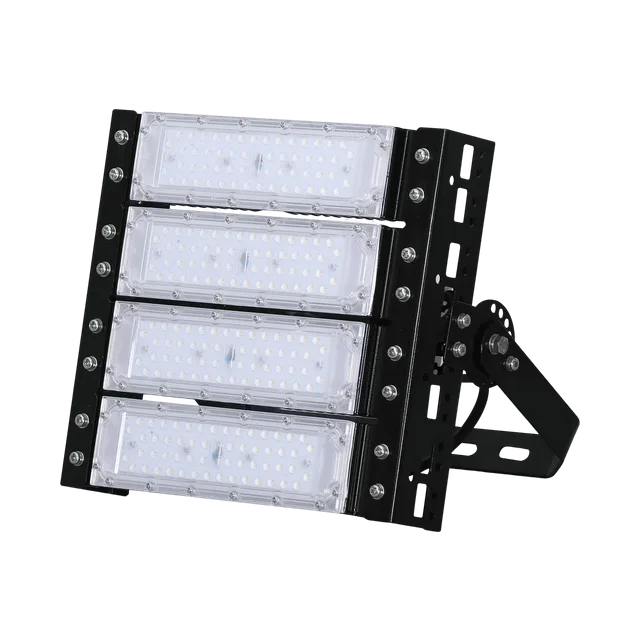 | SJTG606 | Multi-module design, extends to 480W | 320 × 110 × 648 |
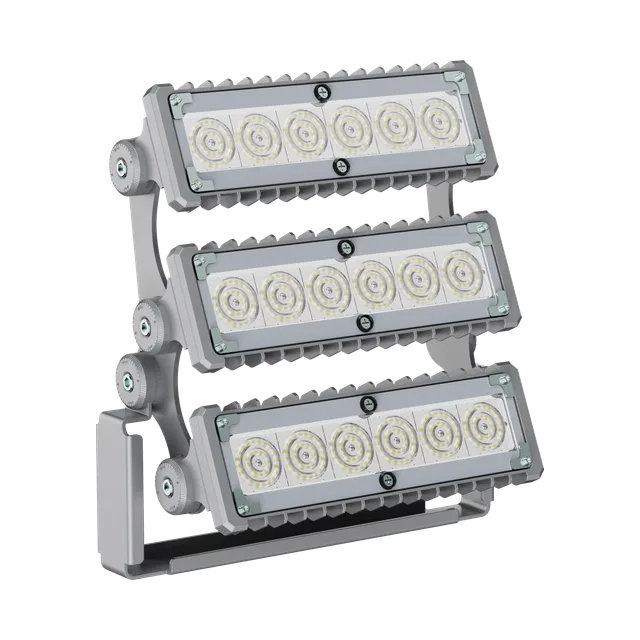 | SJTG611 | Modular flagship — individually aimable units | 419 × 291 × 601 |
Dimensions in mm from the factory catalog. All housings: die-cast aluminum, IP65. Full datasheet and IES/LDT files on request.
Where This Class Works
Three duties this wattage is specified for most often — and what changes in the specification for each.
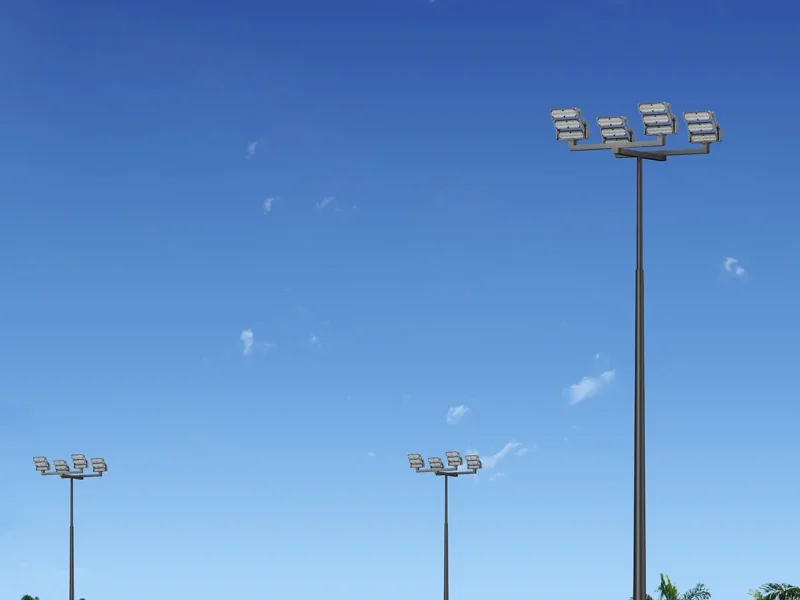
Class II and III competition pitches
Sports lighting works in multiples: a training-class pitch typically runs several 400W-class floods per pole across four to six poles, with the exact count set by the EN 12193 calculation for your dimensions and class rather than by a catalogue rule of thumb.
- Sized from the EN 12193 photometric study
- Flicker data available for broadcast use
- Individually aimable on the modular platform
High-mast rings over yards and interchanges
On 20–40 m masts the 400W class is the standard ring fixture. Narrow beams reach the coverage edge while wider units fill the core — the mix, and the aiming schedule that goes with it, is what the photometric model produces.
- 4–12 fixtures per mast, mixed beam angles
- Aiming schedule supplied with the layout
- Secondary retention for work at height
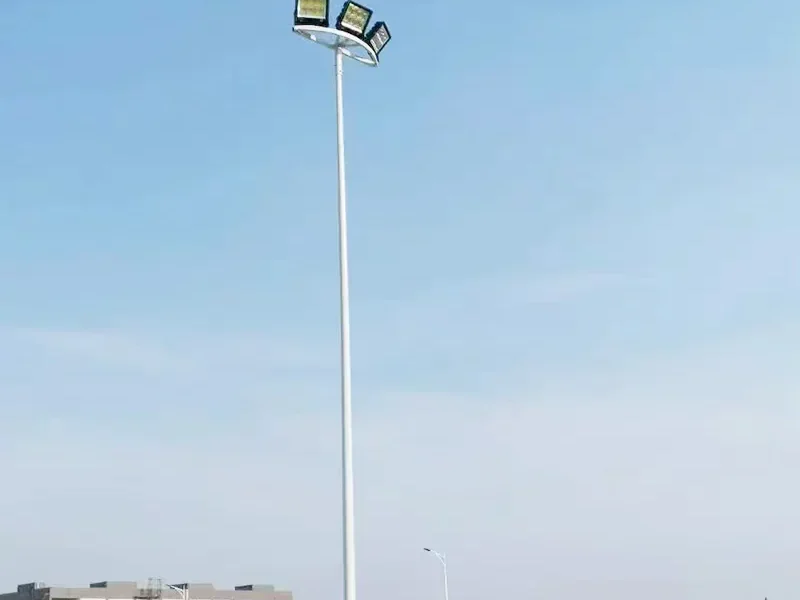
Cranes, aprons and coastal structures
Fixtures on crane structures and coastal masts face constant vibration and driven salt spray. That makes the bracket, the fasteners and the finish part of the specification — not accessories chosen after the fact.
- Salt-spray tested finish for coastal duty
- Stainless external fasteners
- Vibration-rated mounting hardware
How It Goes Up
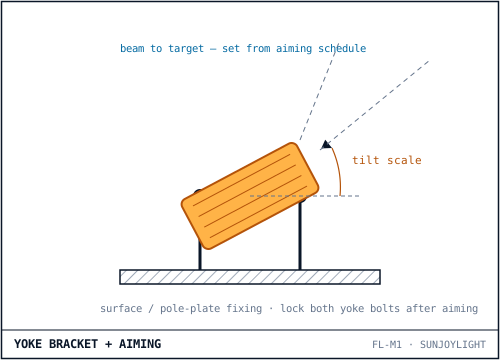
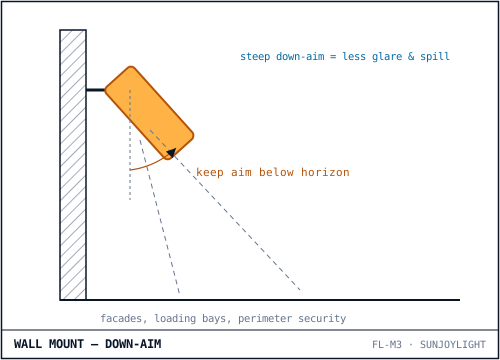
The mounting methods this fixture class is supplied for. Installation photographs from delivered projects are being catalogued and will be added alongside.
Every Order Ships With the Paperwork
The documents an engineer needs to verify the design and an importer needs to clear customs — supplied as standard, not on request.
IES / LDT files for the exact housing and optic quoted, so your designer models the fixture you are buying.
A free DIALux study from your dimensions — lux, uniformity and fixture count verified before you commit.
CE / FCC / CCC documentation with the type-test reports behind it, plus the Ex certificate where applicable.
Driver spares quoted with the order and an engineer contact who answers after the invoice is paid.
Straight Answers to the Questions Buyers Ask in Forums
What buyers report in sourcing forums and marketplace reviews — and how to check any supplier, including us.
At 400W and 12–30 m mounting, a bad distribution wastes more money than a bad price saves. The IES/LDT file is what lets your designer verify coverage before a single bracket is welded — we supply files with the quotation, and any serious supplier can.
A quality 400W LED genuinely replaces a 1000W MH flood — the forum horror stories come from units whose real output was nowhere near the label. Ask for measured photometry (we publish our 200W unit's goniophotometer report as the reference for the range's test discipline) and run the layout.
Fixtures on masts and poles are the most electrically exposed equipment on a site. Specify 10 kV-class surge protection and confirm the driver's rating in writing — it is the cheapest insurance in the order.
Every fixture adds sail area at the mast crown. Get the fixture's projected area and weight into the structural check — LED retrofits usually relax the load versus old HID rings, but “usually” is not a calculation.
400W LED Flood Light — Answered
Is a 400W LED flood light enough for a football pitch?
Not alone — sports lighting works in multiples. A Class III training pitch typically uses several 400W-class floods per pole across 4–6 poles, with the exact count set by the EN 12193 photometric calculation. Send the pitch dimensions and class and we return the layout with fixture counts and aiming angles.
What does a 400W LED flood replace?
Typically a 1000W metal halide or HPS flood, delivering comparable usable light at less than half the connected load, with far better lumen maintenance and instant restrike. Confirm with the IES file at your mounting geometry.
Can these fixtures mount on high masts?
Yes — the 400W class is standard on 20–40 m high-mast rings. Specify the vibration-rated bracket, secondary retention and surge protection for mast duty; our high mast lighting guide covers the aiming and spacing rules.
Do you provide photometric files before order?
Yes. IES/LDT files for the selected housing and optic are supplied with the quotation, and our engineers prepare a free DIALux layout from your site plan so the design is verified before any commitment.
Send Us the Space, Not Just the Wattage
Share the dimensions, mounting height and the level you need to hold. Our engineers return a lighting layout with fixture count, aiming and the photometric files behind it — before you commit to anything.
Floor plan or site dimensions, mounting height, target lux or the standard you must meet.
A DIALux study with fixture count, layout, aiming and IES files — at no cost.
Your engineer checks the numbers against the standard. Only then does a quotation matter.
Manufacturing in Changzhou since 1999 · Shipping to 50+ countries · CE / FCC / CCC
Tell us about your project.
Get a quote within 24 hours.
Share your application — environment, requirements, quantity. A real engineer responds with a tailored quote, IES files, and timeline within one business day.