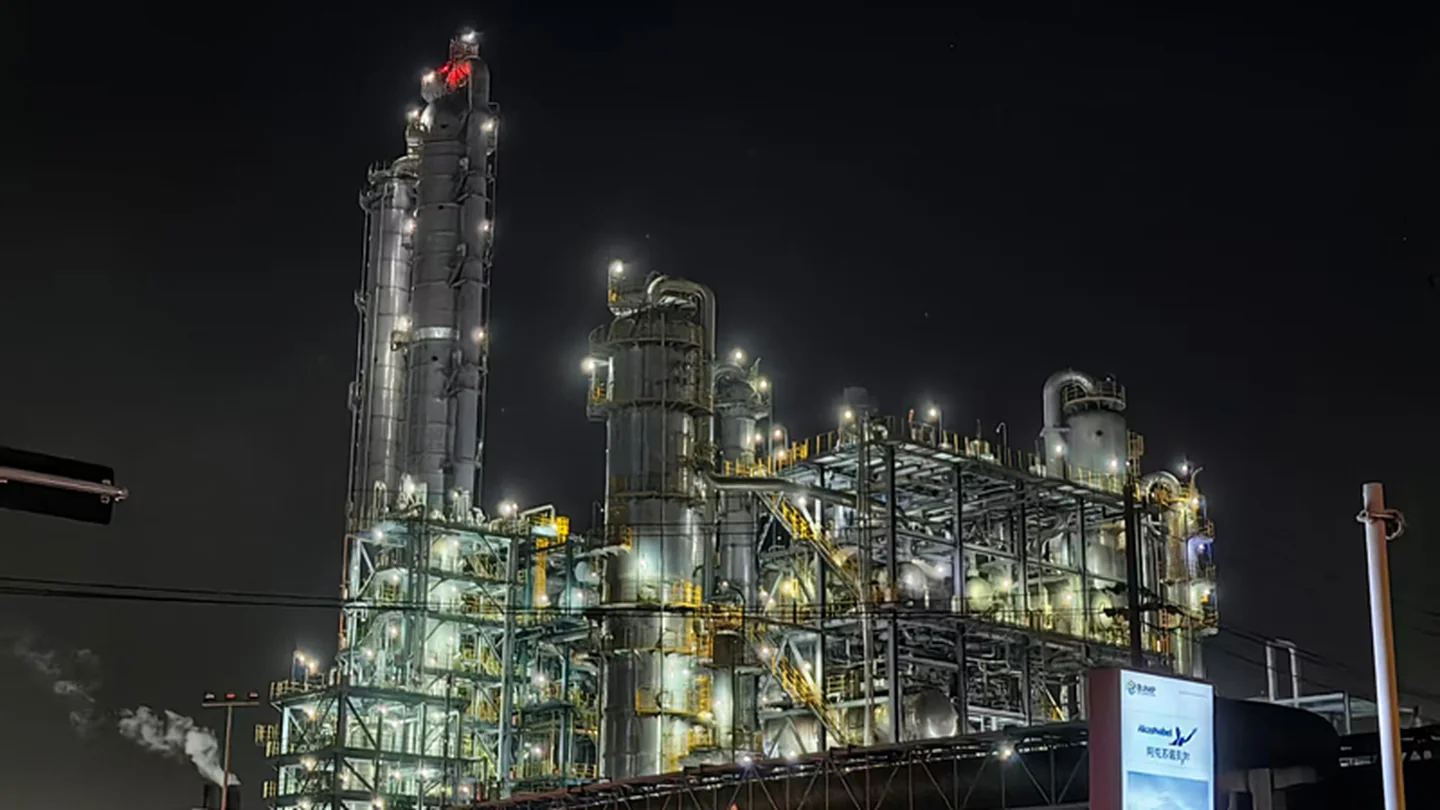
The difference between Zone 1 and Zone 2 is not how dangerous the area is. Both contain a flammable atmosphere. The difference is how often, and for how long, that atmosphere is actually present.
Zone 1: likely to occur in normal operation. Zone 2: not likely in normal operation, and short-lived if it does.
That single distinction cascades into everything downstream — which protection concepts are permitted, what a fixture costs, how it is installed, how it is inspected, and how much of your project budget disappears into fixtures that were never needed. Getting it wrong in the safe direction wastes money. Getting it wrong in the other direction is a safety failure that an inspection will find.
Key Takeaways
- Zones describe frequency of presence, not severity. Zone 0 is continuous or long periods, Zone 1 is likely in normal operation, Zone 2 is unlikely and brief.
- The zone drawing is a site document, not a supplier judgement. Ask for it before quoting; never infer a zone from a photograph.
- Zone 2 permits protection concepts that Zone 1 does not, and that is where most of the cost difference lives.
- Ex n / Ex ec equipment is a Zone 2 concept only. Fitting it in Zone 1 is the single most common substitution error.
- The North American Class/Division system is a different framework, not a translation. Division 1 is broadly comparable to Zones 0 and 1 combined, Division 2 to Zone 2.
Where Zones Come From
Area classification is a site engineering exercise, performed before any equipment is chosen. It works from sources of release: flanges, seals, vents, sampling points, pump glands, open surfaces. Around each source, the assessment considers how much flammable material can escape, how readily it disperses, and how effective the ventilation is.
The output is a drawing with zoned volumes, and it belongs to the site rather than to the lighting supplier.
| Gas zone | Presence of flammable atmosphere | Typical example |
|---|---|---|
| Zone 0 | Continuous, or for long periods, or frequently | Inside a tank vapour space |
| Zone 1 | Likely to occur in normal operation | Immediately around vents, seals, sampling points, loading arms |
| Zone 2 | Not likely in normal operation, and short-lived if it occurs | The outer envelope around a Zone 1, most of a well-ventilated process area |
Dust follows a parallel scheme with the same logic:
| Dust zone | Presence of combustible dust cloud | Typical example |
|---|---|---|
| Zone 20 | Continuous or long periods | Inside a silo, mixer or filter housing |
| Zone 21 | Likely in normal operation | Around a discharge point, a bagging station |
| Zone 22 | Not likely, and short-lived | The general area of a mill or feed plant |
One grouping sits outside this scheme entirely: mines subject to firedamp use Group I equipment rather than the Group II gas groups above. The mining site lighting guide covers that distinction and where it bites.
Dust equipment has its own grouping — Group III, subdivided IIIA / IIIB / IIIC — and its own temperature rule, which is derived from two measured properties rather than read off a class. The coal handling and processing lighting guide applies both to a plant where settled dust is the governing hazard.
Two practical points that catch buyers out. Zone drawings age. A plant that was reclassified after a process change may still be running to a fifteen-year-old drawing, and the lighting scheme inherits whatever error is on it. And a zone is a volume, not a room. A single building often contains a Zone 1 envelope, a Zone 2 envelope beyond it, and unclassified space beyond that, which means three different fixture specifications inside one shell.
What Actually Changes for a Luminaire
Here is the part that specifications get vague about. Between Zone 1 and Zone 2, four things change.
1. The permitted protection concepts
This is the substantive difference. Zone 1 equipment must remain safe when a fault occurs. Zone 2 equipment only has to be safe in normal operation, because the probability of a fault and an atmosphere coinciding is considered acceptably low.
| Concept | Principle | Zone |
|---|---|---|
| Ex d — flameproof | Contains an internal explosion and cools the escaping gas | Zone 1 |
| Ex e — increased safety | Prevents arcs and hot surfaces occurring at all | Zone 1 |
| Ex de — combined | Flameproof body, increased-safety terminals | Zone 1 |
| Ex i — intrinsic safety | Limits energy below ignition capability | Zone 0 / 1 |
| Ex p — pressurisation | Excludes the atmosphere with internal overpressure | Zone 1 / 2 |
| Ex m — encapsulation | Potting excludes the atmosphere from live parts | Zone 1 |
| Ex n / Ex ec — non-sparking | Cannot ignite in normal operation; faults not considered | Zone 2 only |
| Ex t — protection by enclosure | Dust-tight body with limited surface temperature | Dust zones |
2. The equipment protection level
Every certified fixture carries an EPL in its marking: Ga for Zone 0, Gb for Zone 1, Gc for Zone 2 (with Da, Db, Dc for dust). This is the fastest way to check a nameplate against a zone, because it is a single letter that answers the question directly.
Equipment rated for a more demanding zone is always acceptable in a less demanding one. A Gb fixture is fine in Zone 2. A Gc fixture in Zone 1 is not.
3. The cost and the weight
A Zone 1 flameproof luminaire is a machined casting built to contain an internal explosion. A Zone 2 fixture is not. The difference shows up in purchase price, in mounting structure, in installation labour, and in how easily the fixture can be serviced.
This is why over-classifying an area is not a harmless safety margin. Specifying Zone 1 fixtures across an entire plant that is mostly Zone 2 can multiply the lighting budget without improving safety, because the Zone 2 areas were never at Zone 1 risk in the first place.
4. The inspection regime
Ex installations are inspected on a schedule, with the grade and frequency reflecting the zone. Zone 1 attracts closer scrutiny. Flame-path condition, gland selection, blanking of unused entries and marking legibility are all part of the inspection, and they apply to the installed fixture rather than to the certificate it shipped with.
Zones vs the North American Class and Division System
Buyers working across both frameworks routinely try to translate one into the other. They are separate systems with different histories, and the mapping is approximate.
| IEC / GB framework | North American traditional | |
|---|---|---|
| Continuous presence | Zone 0 | Class I, Division 1 |
| Likely in normal operation | Zone 1 | Class I, Division 1 |
| Unlikely and brief | Zone 2 | Class I, Division 2 |
| Material grouping | Group II subdivided IIA / IIB / IIC | Groups A, B, C, D |
| Dust | Zones 20 / 21 / 22 | Class II, Divisions 1 / 2 |
Note the asymmetry in the first two rows: Division 1 covers what the zone system splits into Zone 0 and Zone 1. That single fact explains most cross-market confusion, and it is why a Division 1 requirement cannot simply be answered with a Zone 1 fixture without checking what is actually present.
The gas groups also invert in a way that trips people up. In the IEC framework, IIC is the most demanding group (hydrogen, acetylene) and IIA the least. In the North American Group letters, A is the most demanding. Reading them as if they run the same direction is a real and repeated specification error. See gas groups for the material lists.
North America also permits the zone system as an alternative, so modern plants may use either. Ask which framework the site’s classification drawing uses before comparing anything.
The Four Errors That Fail an Inspection
Fitting Ex n / Ex ec in Zone 1. The concept only considers normal operation. It is cheaper for exactly that reason, and substituting it into Zone 1 is not a marginal call, it is non-compliant.
Ignoring the temperature class. The zone tells you the frequency; the temperature class tells you the maximum surface temperature the fixture may reach, and it must sit below the auto-ignition temperature of the material present. A fixture correct for the zone and wrong for the T class is still wrong.
Ignoring the gas group. Same principle. A IIB fixture in a IIC atmosphere is not certified for that duty, regardless of zone.
Treating a sealed fixture as an explosion-protected one. An IP66 marine-grade floodlight is not a Zone 2 fixture. Sealing against water and dust is a different engineering problem from preventing ignition, and an IP rating makes no statement about ignition risk.
Reading the Marking
A complete Ex marking answers all of these at once. For example:
Ex db eb IIC T4 GbFlameproof body with increased-safety terminals, gas group IIC, temperature class T4, equipment protection level Gb, which means Zone 1. Each element restricts where the fixture may legally be installed, and the Ex marking decoder walks through reading any nameplate in the field.
Our SJFB series is certified to GB/T 3836-2021 (certificate ZJEx25.1185) for gas group IIC duty. GB/T 3836 follows the structure of IEC 60079, which is why the zone logic above reads the same in both, and the technical equivalence guide covers where the two align and where they do not. GB/T paperwork is not a legal substitute for a regional scheme where one is mandated, which is a legal constraint rather than an engineering one.
What to Send a Supplier
A quotation request that contains these five items gets an accurate answer. One that omits them gets a guess.
- The area classification drawing, or at minimum the zone for each lighting position.
- The gas or dust group present.
- The temperature class required, derived from the material’s auto-ignition temperature.
- Ambient temperature range at the fixture position, since certification is tied to a stated ambient.
- The certification scheme the project must satisfy, and the destination market.
Send us the classification drawing and the lighting positions and our engineers return a fixture schedule with the marking for each position, plus the photometric layout behind it. Where part of a plant is unclassified, we will say so rather than quoting Ex fixtures across the whole site. Our explosion-proof range covers 20 W to 400 W for Zone 1 and Zone 2 duty, with the 100W explosion-proof LED light as the most commonly specified rating, and the oil and gas and chemical plant pages show how the same fixtures are deployed by area.
FAQ
What is the difference between Zone 1 and Zone 2? Frequency of presence, not severity. Zone 1 is where a flammable atmosphere is likely to occur in normal operation; Zone 2 is where it is not likely and would be short-lived if it did. The practical consequence is that Zone 1 equipment must remain safe under fault conditions, while Zone 2 equipment only has to be safe in normal operation, which permits cheaper protection concepts such as Ex n / Ex ec.
Can I use Zone 1 lighting in a Zone 2 area? Yes. Equipment certified for a more demanding zone is always acceptable in a less demanding one, so a Gb-marked fixture may be used in Zone 2. The reverse is not true. Bear in mind that over-specifying across a large site raises cost and fixture weight without adding safety in areas that were never at Zone 1 risk.
Who decides the zone classification? The site does, through an area classification study performed by the operator or their engineering contractor, and documented in a drawing. It is not a lighting supplier’s judgement and cannot be inferred from photographs. Ask for the drawing at enquiry stage, and check when it was last revised, since process changes can reclassify an area.
How does Zone 1 map to Class I Division 1? Approximately, and not one-to-one. Division 1 covers what the zone system splits into Zone 0 and Zone 1, while Division 2 corresponds broadly to Zone 2. The gas groups also run in opposite directions: IIC is the most demanding IEC group, while A is the most demanding North American group. Confirm which framework the site’s classification drawing uses before comparing equipment.
Is an IP66 fixture suitable for a hazardous area? No. An IP rating describes protection against dust and water ingress and says nothing about ignition risk. Sealing and explosion protection are different engineering problems solved by different constructions. A classified area requires a fixture certified for that zone, gas group and temperature class.
What are Zone 20, 21 and 22? The dust equivalents of the gas zones. Zone 20 is where a combustible dust cloud is present continuously or for long periods, typically inside equipment such as silos and filters. Zone 21 is where it is likely in normal operation, such as around a discharge or bagging point. Zone 22 is where it is unlikely and short-lived, covering much of the general area in a mill or feed plant.
Does a GB/T 3836 certificate cover a Zone 1 installation? It certifies the equipment under that standard for the zone, gas group and temperature class stated in the marking, and GB/T 3836 follows the structure of IEC 60079. Whether it satisfies your project depends on which certification scheme the destination market and the client’s specification require, which is a legal and contractual question rather than a technical one. Tell us the destination market at enquiry stage and we will confirm the route for that model.