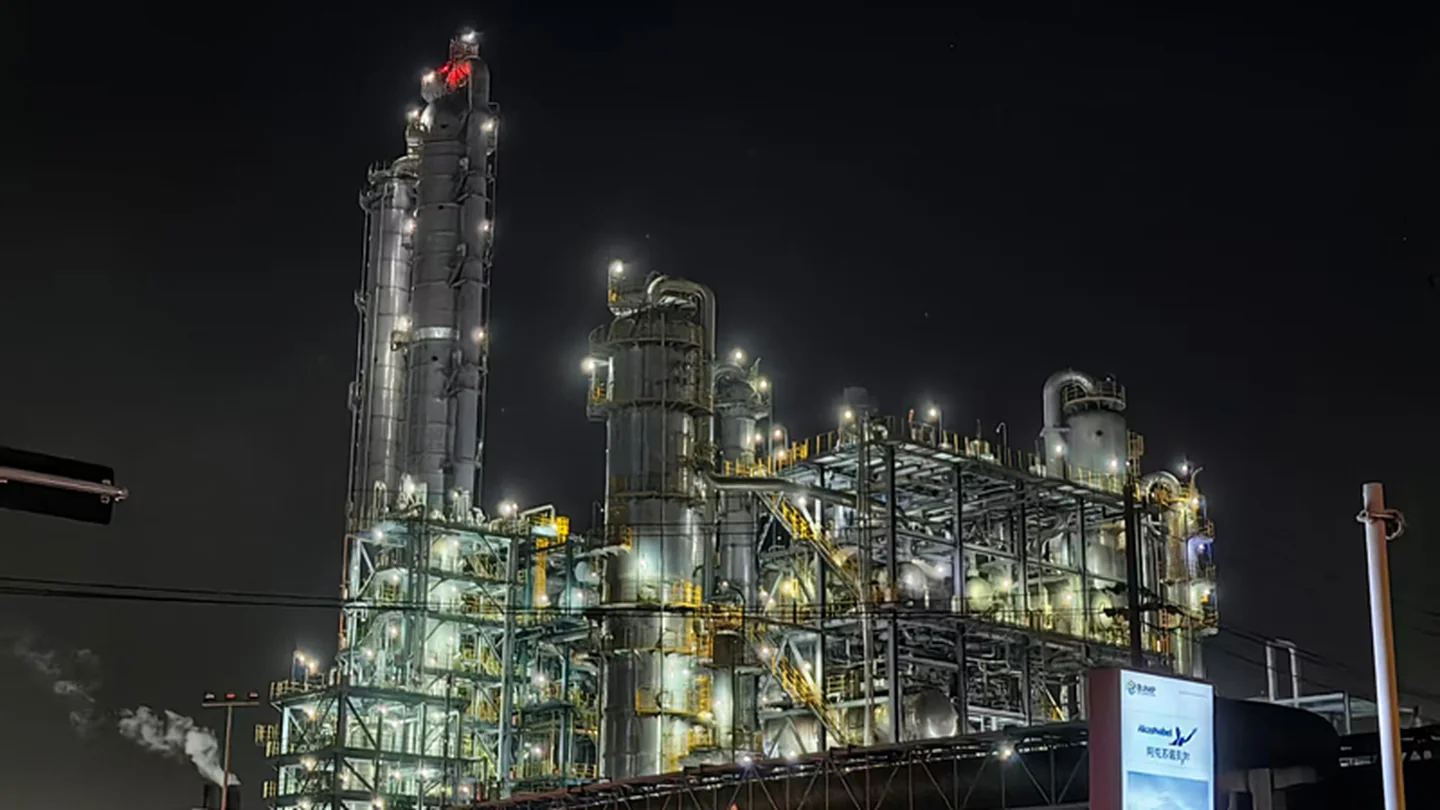
Choosing an explosion proof LED light is not a lighting decision that happens to involve safety — it is a safety decision that happens to involve lighting. Put the wrong fixture in a classified zone and you have not merely bought a disappointing lamp: you have introduced a potential ignition source into an atmosphere that is, by definition, capable of exploding. That is a legal exposure, an insurance exposure, and a personnel exposure all at once.
The good news is that the decision is systematic. Seven steps, in order, take you from a site drawing to a defensible purchase — and the seventh is the one most buying guides skip entirely: proving the certificate you were shown is real.
Key Takeaways
- Selection runs in a fixed order: zone → gas group and temperature class → Ex marking → certification scheme → certificate verification → environment and format → wattage and mounting.
- You can always up-spec (a Zone 1 fixture in a Zone 2 area) but never down-spec. The same one-way rule applies to gas groups: IIC-certified equipment covers IIB and IIA, never the reverse.
- The marking string on the fixture — not the brochure, not the listing title — is the specification. If it disagrees with the certificate, treat the product as uncertified.
- Certificates get faked. Check the number against the issuing body’s records, confirm the model list includes your exact model, and demand the full type-test report rather than the cover page.
- “Explosion proof” and “IP65” are unrelated claims. An IP rating describes dust and water ingress; it says nothing about ignition safety and is not a substitute for Ex certification.
What “Explosion Proof” Actually Means
The term is a misnomer that has survived a century of use. An explosion proof luminaire is not built to survive an external blast. It is built so that it never becomes the source of one.
Two engineering strategies dominate lighting, and most industrial fixtures combine them:
Flameproof containment (Ex d). The flameproof enclosure accepts that flammable gas may enter the housing. If it ignites inside, the cast enclosure withstands the pressure and forces the escaping gases through long, precisely machined gaps — flame paths — that cool them below the ignition temperature of the surrounding atmosphere. This is why genuine Ex d fixtures are heavy, thick-walled, and specific about bolt counts and torque.
Increased safety (Ex e). Increased safety takes the opposite approach: eliminate the ignition source entirely. No arcing parts, enhanced insulation, enlarged creepage and clearance distances, vibration-secure terminals, conservative temperature margins.
Most modern LED fixtures are marked Ex db eb because they use both: a flameproof optical and driver chamber married to an increased-safety terminal compartment, so electricians can terminate cables without opening the flameproof chamber and risking flame-path damage. That construction detail matters at installation time more than any marketing claim on the box.
Step 1: Classify the Area
Everything downstream depends on getting this right, and it is not the lighting supplier’s call — it comes from the site’s hazardous-area classification study, produced by the operator or their engineering consultant.
| Zone | Gas atmospheres | Zone | Dust atmospheres |
|---|---|---|---|
| Zone 0 | Explosive atmosphere present continuously or for long periods | Zone 20 | Combustible dust cloud present continuously |
| Zone 1 | Likely to occur in normal operation | Zone 21 | Dust cloud likely in normal operation |
| Zone 2 | Unlikely in normal operation, and only briefly if it occurs | Zone 22 | Dust cloud unlikely, and brief if it occurs |
Two rules follow, and both are one-way:
You may up-spec, never down-spec. A fixture certified for Zone 1 may be installed in Zone 2. Zone 1 vs Zone 2 lighting covers what actually changes in the specification between the two, and how the North American Class and Division system maps onto zones. A Zone 2 fixture in a Zone 1 area is a serious violation, regardless of how similar the products look or how confident the salesperson sounds.
Gas and dust are separate classifications. A fixture certified for gas atmospheres is not automatically suitable for combustible dust. Dust zones carry their own marking (Ex tb IIIC, for example) and a maximum surface temperature stated in degrees rather than as a T-class. Grain terminals, feed mills, sugar plants and woodworking facilities need the dust marking read as carefully as a refinery reads its gas marking.
Step 2: Match the Gas Group and Temperature Class
Two independent properties of the atmosphere drive two independent fixture requirements.
Gas group ranks how easily an atmosphere ignites and how violently it burns. Group IIA (reference gas propane) covers many fuels and solvents; IIB (ethylene) covers more energetic chemistry; IIC (hydrogen and acetylene) is the most severe and demands the tightest flame paths. Equipment certified IIC may serve IIB and IIA areas — never the reverse. Because IIC construction costs more, blanket-specifying it “for safety” inflates project cost without adding protection where the gas study says IIA is what you have.
Temperature class caps the maximum surface temperature the equipment can reach, so it can be checked against the auto-ignition temperature of the gases present.
| Class | Max surface temperature | Typical coverage |
|---|---|---|
| T1 | 450 °C | Methane and similar high-AIT gases |
| T2 | 300 °C | Butane, many alcohols |
| T3 | 200 °C | Diesel vapours, kerosene |
| T4 | 135 °C | The great majority of industrial atmospheres |
| T5 | 100 °C | Stricter specifications |
| T6 | 85 °C | Carbon disulfide and similar low-AIT substances |
Higher T-number means a cooler surface and a wider safety margin. This is one of the quieter arguments for LED in hazardous areas: LED fixtures reach T4 and better far more easily than the HID and halogen fittings they replace, which ran hot by design.
The confusion worth clearing up now: temperature class is not the ambient temperature rating. T-class is the fixture’s maximum surface temperature, checked against the gas. The ambient rating (Ta) is the surrounding air temperature the fixture is qualified to operate in — a hot Gulf process area or an unventilated plant room can exceed a fixture’s Ta while its T-class is perfectly adequate. Both must be satisfied, and buyers routinely conflate them. When a specification says “rated to 90 °C,” ask which of the two figures is meant.
Step 3: Read the Ex Marking
The marking string is the specification. Everything else — the listing title, the datasheet headline, the salesperson’s summary — is commentary.
Read it right to left when you are checking suitability: the EPL tells you the zone, the T-class and gas group tell you whether it survives your atmosphere, and the protection concepts tell you how it is built and how it must be maintained. Our Ex marking guide walks through every element, including the dust equivalents.
Step 4: Choose the Certification Scheme for Your Market
Certification is jurisdictional, and this is where international buyers get the most conflicting advice.
| Scheme | Where it is required or expected |
|---|---|
| ATEX | Legally required for workplaces in the European Union |
| IECEx | International scheme; frequently specified by multinational operators |
| UL / CSA (Class-Division or Zone) | North America |
| GB/T 3836 | China; technically aligned part-for-part with IEC 60079 |
The practical question for anyone sourcing from Asia is whether GB/T 3836 documentation is acceptable. The honest answer has two halves. Technically, GB/T 3836-2021 mirrors IEC 60079: same zones, same gas groups, same temperature classes, same marking grammar, same physics-based type tests — our technical equivalence comparison walks the parts side by side. Legally, acceptance depends on jurisdiction: EU workplaces require ATEX, full stop, while many projects across the Middle East, Africa, Southeast Asia and Latin America accept GB/T 3836 documentation after an equivalence review by the operator’s engineer.
Our own documentation, stated plainly because vagueness here wastes everyone’s time: the SJFB series is type-tested and certified to GB/T 3836-2021 under certificate ZJEx25.1185, covering Ex d / Ex de protection, IIC gas groups, and Zone 1 and Zone 2 duty — and that certificate travels with the quotation. Where a project specifies ATEX, IECEx or another regional mark, tell us the destination and the specification at enquiry stage and we will confirm the certification route for that model before you commit, planned into the project timeline rather than discovered after tooling. Ask any supplier which marks apply to the exact model you are buying, and get the answer in writing.
Step 5: Verify the Certificate Is Genuine
This is the step the competing buying guides do not cover, and it is the one that protects you.
A certificate is a PDF. PDFs can be edited. Sourcing forums are full of buyers who received a certificate that was authentic in every respect except that it belonged to a different company, covered a different model, or had expired two years earlier. Four checks close most of that gap:
1. Verify the number against the issuing body. Every scheme maintains records — ATEX certificates trace to a notified body, IECEx to the online IECEx system, GB/T 3836 to the issuing Chinese certification body. Check the certificate number in the issuer’s records rather than trusting the document you were emailed.
2. Confirm your exact model is on the model list. Certificates cover specified models and often specific enclosure sizes. A genuine certificate for a 100 W round fixture does not automatically cover the 400 W flood variant in the same catalogue. Match the model code character for character.
3. Confirm the manufacturer’s legal name and site. The certificate names the manufacturing entity. If the certificate says one company and your proforma invoice says another, ask why — sometimes the answer is a legitimate export brand relationship, and sometimes the answer is that a trading company borrowed a factory’s paperwork. Either way you want it explained before payment, not after. Our own certificate names Changzhou Shuangjia Electrical Appliance Co., Ltd., the manufacturing entity behind the Sunjoylight brand, and we invite exactly this check.
4. Ask for the full type-test report, not the cover page. The certificate is a conclusion; the test report is the evidence. A supplier who has genuinely been through type testing has the report and will send it. Reluctance here is informative.
One more check that costs nothing: an IP rating is not explosion protection. IP65 describes resistance to dust and water ingress. A fixture can be flawlessly IP66-sealed and still be entirely illegal in a classified zone, because nothing about ingress protection evaluates ignition safety. Listings that advertise “IP65 explosion proof” without a marking string are describing one property and implying another.
Step 6: Match the Fixture to the Environment and Format
With the safety envelope settled, the fixture still has to survive the site and fit the mounting position.
Environment decides materials and finish. Coastal and offshore installations need corrosion-resistant construction and stainless external fasteners — a perfect coating with mild-steel bolts still streaks rust within a season. Chemical process areas add solvent and wash-down exposure. Mining and mineral handling add abrasion, vibration and dust loading that clogs fins and shortens life if the body is not sealed. Vibration-heavy positions need secured mountings and, at height, secondary retention.
Format decides coverage. Four shapes cover most hazardous-area lighting:
| Format | Typical position | What it does best |
|---|---|---|
| Round / high-bay style | Pendant over process floors and platforms | General area coverage from height |
| Flood / rectangular | Aimed from structures and columns | Directed light onto equipment and work areas |
| Linear / tube | Under platforms, in galleries, along walkways | Continuous light in tight, low-clearance spaces |
| Portable / temporary | Turnarounds, confined-space entry, maintenance | Task light where nothing is installed |
A process unit typically needs three of the four. Specifying one format across a whole plant is the most common way to end up with well-lit floors and dark valve stations.
Step 7: Size Wattage to Mounting Height
Only now does wattage matter — and it is driven by mounting height and target level, not by the biggest number available.
| Mounting height | Typical duty | Wattage band |
|---|---|---|
| 3 – 5 m | Walkways, stairs, control cabins, galleries | 20 – 50 W |
| 4 – 8 m | Process areas, pump rows, loading racks | 50 – 150 W |
| 8 – 12 m | Tall process structures, indoor bays | 150 – 250 W |
| 12 m + | Tank farms, mast positions, large yards | 250 – 400 W |
These are starting points for a bill of quantities, not a design. The binding numbers come from a photometric calculation against your area-classification drawing, which any competent supplier should prepare before you order — our SJFB explosion-proof range spans 20 W to 400 W across round, flood and linear formats, and the 100 W class covers the majority of process-area positions in that table.
The Procurement Checklist
Before a purchase order for hazardous-area lighting leaves your desk, the file should contain:
- The area-classification drawing — zones, gas groups, and the governing substances, from the operator’s study.
- The Ex certificate — number verified against the issuing body, your exact model on the model list, manufacturer name matching the supplier.
- The full type-test report — the evidence behind the certificate, not the cover page.
- The marking string you will receive — confirmed in writing, and checked against the certificate on delivery.
- The photometric layout — fixture count, positions and levels, built from the supplier’s IES files against your drawing.
- Installation accessories — certified cable glands and any adapters, because the wrong gland voids the fixture’s protection at the last connection.
- Spares and inspection plan — drivers and gaskets stocked, and the inspection regime (IEC 60079-17 grades) agreed with your maintenance team.
The Bottom Line
Explosion proof lighting rewards buyers who work in order: classify the area, match the gas group and temperature class, read the marking, choose the scheme your jurisdiction demands, then verify that the certificate behind it is genuine — and only then argue about wattage and price. The first six steps are engineering; the seventh is diligence, and it is the one that separates a defensible purchase from an expensive assumption.
If you are specifying now, send us the area-classification drawing and the layout and our engineers return a fixture schedule with the photometric study, the GB/T 3836 certificate and the type-test report — before any deposit, so your safety engineer can complete the acceptance review while the commercial conversation is still open.
FAQ
What is the difference between explosion proof and IP65? They describe unrelated properties. IP65 rates resistance to dust and water ingress. Explosion protection is a certified evaluation of whether the equipment can ignite a flammable atmosphere, expressed in a marking string like Ex db IIC T4 Gb. A fixture can be IP66-rated and still be illegal in a classified zone. Any product advertised as “explosion proof” without a marking string and a certificate is making an unverified claim.
Can I use a Zone 2 light in a Zone 1 area? No. Zone 1 requires equipment at protection level Ga or Gb; a Zone 2 fixture is Gc and is not permitted. The rule runs one way only: you may install higher-rated equipment in a less severe zone, never lower-rated equipment in a more severe one. The same applies to gas groups — IIC covers IIB and IIA, but IIA equipment may not be used where IIC is required.
Is GB/T 3836 certification accepted outside China? Technically GB/T 3836-2021 is aligned part-for-part with IEC 60079, so the engineering bar is equivalent. Legally, acceptance depends on jurisdiction: EU workplaces require ATEX, while many projects in the Middle East, Africa, Southeast Asia and Latin America accept GB/T 3836 documentation after an equivalence review. Confirm with the operator’s safety engineer before ordering rather than assuming either way.
How do I know a supplier’s Ex certificate is real? Check the certificate number against the issuing body’s records rather than trusting the emailed PDF, confirm your exact model appears on the certificate’s model list, verify the manufacturer’s legal name matches who you are buying from, and ask for the complete type-test report behind the certificate. A supplier with genuine certification will pass all four checks without friction.
What temperature class do I need? The fixture’s maximum surface temperature must stay below the auto-ignition temperature of the gases at your site. T3 (200 °C) covers many fuels and solvents; T4 (135 °C) covers the great majority of industrial atmospheres. Your site’s gas study names the governing substance — match to that rather than defaulting to the strictest class, which adds cost without adding protection.
Do explosion proof lights work in high ambient temperatures? That depends on the ambient rating (Ta), which is a different figure from the temperature class. T-class is the fixture’s maximum surface temperature, checked against the gas; Ta is the air temperature the fixture is qualified to run in. Hot process areas and unventilated plant rooms can exceed a fixture’s Ta while its T-class remains adequate. Give your supplier the worst-case temperature at the actual fixture position and ask them to confirm both figures for the specific model.
What documents should I demand before paying a deposit? The Ex certificate with a verifiable number, the full type-test report, written confirmation of the marking string you will receive, the photometric layout for your drawing, and confirmation that certified cable glands and accessories are included or specified. Any supplier who treats these as unusual requests is telling you something useful about how often they are asked.